


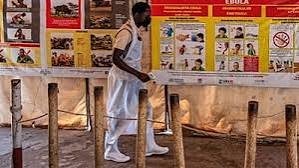
Uganda has introduced a mandatory 21-day quarantine at travellers’ own expense for citizens returning from the Democratic Republic of Congo (DRC), as authorities strengthen measures to prevent the reintroduction of Ebola following new cases reported in neighbouring countries.
The measure was announced by Uganda’s Ministry of Health on Sunday, October 25, as part of tighter border controls prompted by the ongoing Ebola outbreak in the DRC. The ministry said screening had been intensified at Entebbe International Airport, land border crossings and designated road checkpoints.
Uganda declared its outbreak over in July after recording 20 cases, including two deaths. However, the DRC continues to report infections involving the Bundibugyo strain of the Ebola virus, prompting renewed concern over cross-border transmission.
The new restrictions follow Ebola cases reported in Kenya and Nigeria involving people who had travelled through the region. Kenya’s first reported patient travelled from the DRC through Entebbe International Airport to Nairobi on October 3 and died two days later. Nigeria has also confirmed a case involving the wife of a Swiss diplomat, who travelled from Uganda to Abuja via Addis Ababa. Investigations into the possible source of infection are ongoing.
Ugandan authorities have disputed suggestions that the Nigerian patient necessarily contracted the virus in Uganda. The government said investigations were continuing in collaboration with Nigerian health officials and international partners to establish the woman’s movements, possible exposures and the likely route of transmission.
Under the strengthened measures, all travellers entering Uganda must complete passenger locator forms and undergo health screening. People identified as contacts of confirmed cases will be monitored for 21 days, while those who have had contact with suspected cases may be placed in institutional quarantine. Returning Ugandans with a history of travel to the DRC must bear the cost of their quarantine.
The government has also restricted movement across the Uganda-DRC border to essential travellers, including humanitarian workers and truck drivers, subject to screening. Non-essential Congolese travellers entering Uganda are to be returned to the DRC at their own expense, according to the health ministry.
Uganda’s response comes as health authorities in the region work to contain the outbreak and prevent further cross-border transmission. Ebola spreads through direct contact with the blood or other bodily fluids of infected people and contaminated materials. The Bundibugyo strain currently circulating in the DRC has no approved vaccine or specific treatment, making early detection, isolation and supportive care important elements of the response.
The Ugandan government has urged travellers and residents to cooperate with screening procedures and public health instructions, stressing that the country’s previous success in ending local transmission does not eliminate the risk while the virus continues to circulate across its borders.











Leave a comment