


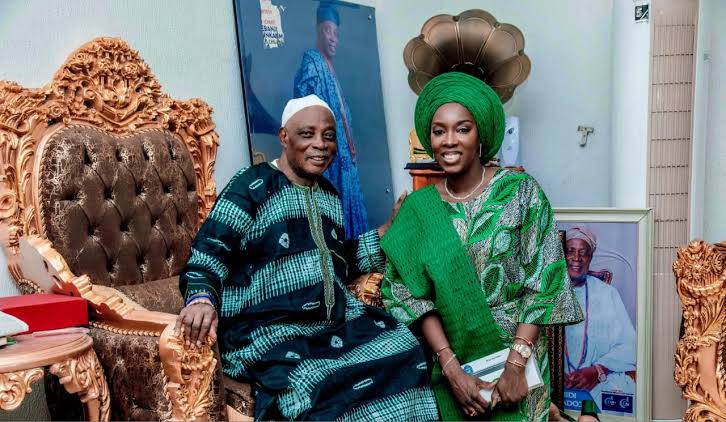
The Olubadan of Ibadanland, Oba Rashidi Ladoja, has urged influential Nigerians and organisations to invest in vocational training and practical skills development to help reduce poverty, tackle unemployment and expand economic opportunities.
Ladoja made the call on Thursday during a courtesy visit by Dr. Abiola Arogundade, Senior Special Assistant to the President on Technical, Vocational and Entrepreneurship Education, who briefed the monarch on the Federal Government’s ongoing vocational training and empowerment programme in Oyo State.
The initiative focuses on equipping young Nigerians with practical, income generating skills that can support self employment, entrepreneurship and financial independence.
The monarch commended Arogundade for the programme, encouraging other public officials, private organisations and individuals with the resources to support similar initiatives.
“It’s a very good initiative, and we are very proud of Arogundade,” Ladoja said. He urged others in similar positions to emulate the effort, noting that skills empowerment could help people become self reliant and contribute to national economic development.
Arogundade said the 10 day training programme began in Ibadan on Sept. 28 and was scheduled to conclude on Friday, Oct. 9, with 200 young people trained in graphics design and artificial intelligence, makeup artistry, and fashion design.
She said the participants would receive work tools to help them establish businesses and apply their newly acquired skills to generate income.
The programme also includes a digital empowerment component, with additional beneficiaries expected to receive tablets to strengthen their access to technology and economic opportunities.
Arogundade explained that she considered it important to brief the Olubadan because of the programme’s scale and its potential impact on residents of Ibadanland. She said the monarch welcomed the initiative and expressed support for efforts to equip people with skills that could improve their livelihoods.
The initiative is being implemented under the Federal Government’s National Poverty Reduction with Growth Strategy, which seeks to improve economic opportunities and support sustainable livelihoods.
Nigeria continues to face challenges associated with unemployment, poverty and limited access to stable sources of income, particularly among young people. Vocational education and entrepreneurship training are among the approaches being pursued to help people develop marketable skills and establish small businesses.
Training in areas such as fashion design, beauty services, graphics and artificial intelligence can provide opportunities for self employment, although long term outcomes depend on access to equipment, finance, customers, mentorship and reliable markets.
Providing participants with work tools alongside training is intended to help bridge the gap between learning a skill and using it to earn an income.
Ladoja’s appeal highlights the potential role of influential individuals, businesses and civil society organisations in expanding access to vocational education beyond government programmes. Partnerships that combine technical training with business support and market access could help more beneficiaries translate their skills into sustainable livelihoods.
The effectiveness of such programmes will ultimately depend on whether participants can establish viable businesses, secure employment and maintain their income after the training ends.










Leave a comment