


Ethiopia has accused neighbouring Eritrea of launching an “all out invasion” of its northern territory, saying it has no option but to defend itself as reports of cross border troop movements and military strikes heighten fears of a renewed war in the Horn of Africa.
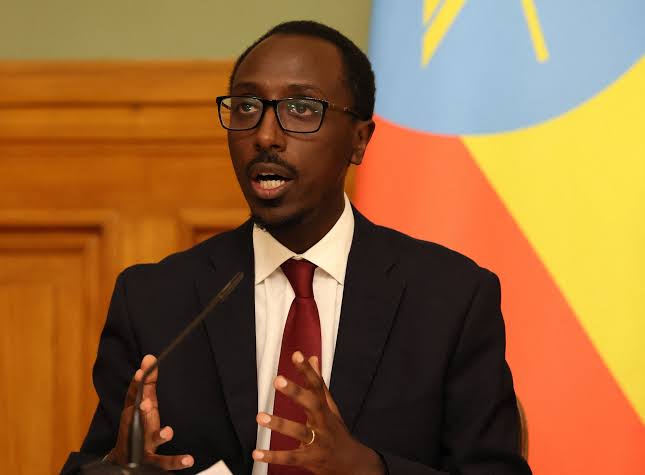
Ethiopian Foreign Minister Gedion Timothewos made the accusation in a letter dated Thursday and addressed to French Foreign Minister Jean Noel Barrot. The letter, shared with Reuters on Friday, was also sent to other members of the United Nations Security Council.
Timothewos said Eritrean forces had advanced as far as 60 kilometres into Ethiopia’s northern Tigray region, describing their presence as an act of aggression that invoked Ethiopia’s right to self defence.
“The all out invasion of parts of northern Ethiopia by Eritrea is a matter of public record,” the letter said, adding that Ethiopia expected international understanding and support.
The Ethiopian government also called for the immediate withdrawal of Eritrean troops from its territory. Eritrea’s Information Minister, Yemane Gebremeskel, did not immediately respond to requests for comment on Friday. He had previously dismissed reports of an incursion, accusing Ethiopia of fabricating the allegations to justify a war against Eritrea.
The latest developments follow reports that Eritrean soldiers were seen travelling through Adigrat, a town in northern Ethiopia near the Eritrean border. Witnesses told Reuters they had seen the troops earlier in the week.
The United States based conflict monitoring organisation ACLED reported that drone strikes believed to have been carried out by Ethiopia’s military targeted Eritrean forces near Adigrat on Wednesday and Thursday as they withdrew from positions in the area.
A resident of Adigrat told Reuters on Friday that repeated explosions could be heard overnight and into the morning from locations several kilometres outside the town.
The reported troop movements and strikes have raised concerns that the two countries could move from a diplomatic confrontation into direct military conflict. The allegations have not been independently confirmed in full, and Eritrea continues to deny that its troops entered Ethiopian territory.
Relations between the neighbouring countries have deteriorated sharply in recent months, despite a peace agreement signed in 2018 that ended years of hostility following their 1998 to 2000 border war.
Eritrea supported Ethiopia’s federal government during the 2020 to 2022 Tigray war, when government forces fought the Tigray People’s Liberation Front (TPLF). The former allies have since fallen out over regional security, political developments in Tigray and Ethiopia’s stated ambition to secure access to the sea.
The latest crisis has unfolded alongside renewed fighting between Ethiopian federal forces and an opposition alliance led by the TPLF. The alliance launched an offensive on Sept. 23, prompting a military response from the government.
Ethiopia has accused Eritrea of supporting the opposition alliance, as well as alleging involvement by Sudan and Egypt. Those countries have denied backing the rebels. Ethiopia and Eritrea severed diplomatic ties after Addis Ababa ordered the closure of its embassy in Asmara and declared 10 Eritrean diplomats persona non grata. Eritrea subsequently cut diplomatic relations with its neighbour.
The confrontation comes as Ethiopia continues to pursue access to the Red Sea, which Prime Minister Abiy Ahmed has described as important to the country’s economic development and national security.
Eritrea, which gained independence from Ethiopia in 1993, has expressed concern about Ethiopia’s maritime ambitions and fears that the landlocked country could seek access to Eritrean ports through coercion. Abiy has said Ethiopia intends to obtain sea access peacefully.
A direct conflict between the two countries could further destabilise the Horn of Africa, a region already affected by armed conflicts, displacement and competition among regional powers.
The 2020 to 2022 war in Tigray caused hundreds of thousands of deaths, according to estimates cited by international observers, and left communities facing extensive humanitarian and reconstruction needs. Renewed fighting risks undermining recovery efforts and disrupting access to essential services.
Ethiopia’s appeal to the United Nations and foreign governments signals an effort to secure diplomatic support for its position. However, with both countries exchanging accusations and military activity reported near the border, the immediate challenge remains preventing further escalation and establishing whether a wider confrontation can be avoided.








Leave a comment