


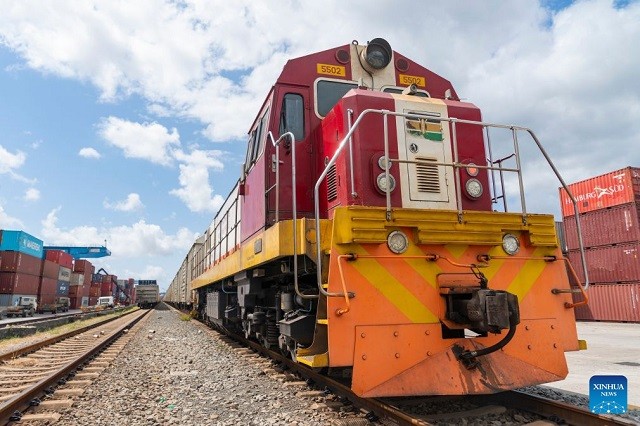
The milestone, announced by Kenya Railways, reflects the increasing adoption of rail transport by importers, exporters, manufacturers, and logistics companies using the Mombasa–Nairobi Standard Gauge Railway. The freight corridor has become one of Kenya’s most important infrastructure investments, connecting the Port of Mombasa—the region’s largest seaport—to the country’s inland transport network.
According to Kenya Railways, the achievement demonstrates growing confidence in rail freight services as businesses seek faster, safer, and more cost-effective alternatives to road transport. Since freight services commenced, millions of containers and bulk cargo consignments have been transported efficiently between Mombasa and Nairobi, significantly reducing pressure on the country’s highways.
The Standard Gauge Railway was developed to modernize Kenya’s transport infrastructure, improve regional competitiveness, and strengthen trade links within the East African Community. The railway has become a critical logistics corridor serving not only Kenya but also neighboring Uganda, Rwanda, South Sudan, Burundi, and the eastern Democratic Republic of the Congo, which depend on the Port of Mombasa for international trade.
Industry experts say the continued growth in freight volumes is evidence that businesses increasingly recognize the economic benefits of rail transport. Compared to heavy-duty trucking, rail offers lower transportation costs for bulk cargo, reduces delivery times, minimizes road congestion, and lowers vehicle maintenance expenses associated with long-distance freight movement.
Kenya’s Ministry of Transport noted that improved cargo efficiency has enhanced the country’s position as a regional logistics hub, enabling importers and exporters to move goods more predictably while supporting manufacturing and industrial growth.
The railway has also contributed to reducing carbon emissions by shifting substantial cargo volumes from road to rail. Environmental analysts note that freight trains consume less fuel per tonne transported than trucks, making rail an important component of sustainable transport strategies as African countries pursue greener economic development.
Despite these achievements, the Standard Gauge Railway has continued to attract debate regarding its financing, operational costs, and long-term commercial sustainability. Since its launch, policymakers and economists have questioned whether freight revenues will eventually offset the significant capital investment required to construct the railway.
Supporters argue that infrastructure projects of this scale should be evaluated based on their broader economic impact rather than short-term financial returns alone. They point to increased trade efficiency, reduced transport costs, improved road safety, job creation, and enhanced regional integration as long-term benefits that extend beyond direct railway revenues.
The latest freight milestone is expected to encourage additional investment in supporting logistics infrastructure, including inland container depots, industrial parks, warehousing facilities, and multimodal transport systems designed to improve cargo handling across East Africa.
Regional trade experts believe efficient transport corridors will become increasingly important under the African Continental Free Trade Area (AfCFTA), which aims to expand intra-African trade by reducing barriers to the movement of goods and services. Reliable rail networks are expected to play a critical role in helping African businesses access larger markets while improving supply chain efficiency.
Kenya Railways says it will continue investing in operational efficiency, customer service, digital cargo tracking, and infrastructure maintenance to sustain freight growth and improve service delivery. Authorities are also exploring opportunities to expand regional connectivity through future railway extensions and partnerships with neighboring countries.
As Africa accelerates investment in transport infrastructure, Kenya’s Standard Gauge Railway continues to demonstrate how modern rail systems can strengthen regional commerce, improve logistics performance, and support long-term economic development. The achievement of transporting more than 50 million tonnes of freight marks another significant step toward positioning East Africa as a competitive trade and logistics gateway for the continent.











Leave a comment