


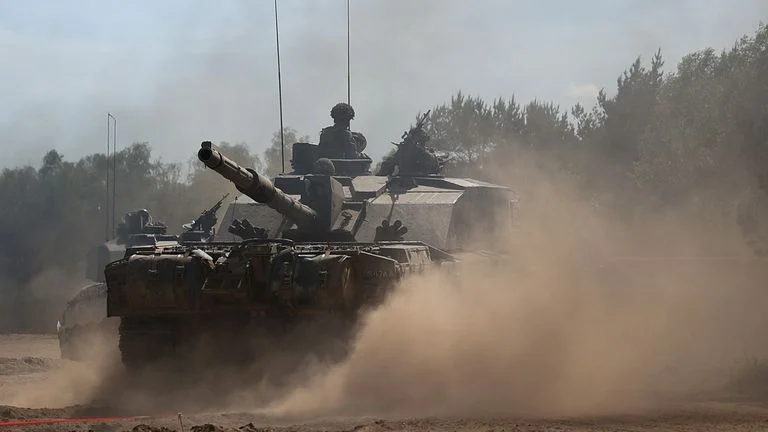
The British government is considering bringing forward its target date for defence spending to reach 3 per cent of gross domestic product, the BBC reported on Monday, in a review that reflects growing concern in London and among allies about evolving security threats.
Under current plans, the United Kingdom aims to increase defence expenditure to 2.5 per cent of GDP by 2027. The 3 per cent goal was originally scheduled to be met after the next general election, following the 2029 parliamentary cycle. Officials are now said to be discussing whether that timetable could be accelerated so the higher spending level is reached earlier in the current parliament.
In 2024 the UK’s defence budget already reached about 2.3 per cent of GDP, exceeding the North Atlantic Treaty Organisation’s minimum guideline of 2 per cent. But persistent pressure from the United States for European allies to boost military investment, combined with concerns about Russia’s invasion of Ukraine and other strategic uncertainties, is driving debates in Westminster about how quickly to deepen British defence commitments.
Prime Minister Keir Starmer has highlighted the need for stronger military spending in response to global instability, noting that the UK must “spend more faster” to meet current defence challenges and support NATO partners. His government has already pledged what it describes as the biggest sustained increase in defence spending since the end of the Cold War.
Accelerating the timeline to reach 3 per cent of GDP on defence would require significant additional resources. The Office for Budget Responsibility has previously estimated that achieving that level by the end of this decade could add roughly £17.3 billion in annual expenditure by 2029‑30 compared with current plans. Treasury officials are reported to be cautious about the fiscal implications of such a shift, underscoring the competing pressures on public finances.
The discussions come against a backdrop of broader policy decisions on Britain’s defence posture. In February 2025, Starmer announced a commitment to raise defence spending to 2.5 per cent of GDP by 2027, funded in part by cuts to the UK’s international aid budget. That move was justified by ministers as necessary for national security, though it generated debate domestically about the balance between military investment and foreign assistance.
No final decision on moving the 3 per cent target date forward has been taken, and officials say the proposals remain under consideration. How the government ultimately resolves the question will shape Britain’s defence policy trajectory and its role within NATO as allies grapple with shared security challenges in Europe and beyond.










Leave a comment