


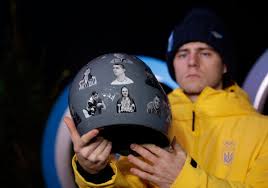
Ukrainian skeleton racer Vladyslav Heraskevych has been disqualified from the 2026 Winter Olympics in Cortina d’Ampezzo after defying International Olympic Committee (IOC) rules by competing with a helmet that featured images of Ukrainian athletes and coaches killed in the war with Russia. The helmet, dubbed his “Memory Helmet,” was intended as a tribute, but the IOC had explicitly banned it, warning that political or war‑related messages were not permitted during competition. Heraskevych, who carried Ukraine’s flag at the Opening Ceremony, ignored repeated pleas and wore the helmet during Thursday’s skeleton event, leading to his disqualification.
The controversy has sparked heated debate. Supporters argue that Heraskevych’s gesture was a powerful act of remembrance and solidarity, while critics—including Olympic officials—insist that the Games must remain neutral and free of political messaging. The IOC’s stance reflects its long‑standing policy of banning political symbols, but the decision has drawn backlash from those who believe the rule silences athletes facing existential national struggles.
Heraskevych himself defended his actions at a press conference, saying he wanted to honor fallen compatriots and remind the world of Ukraine’s suffering. His disqualification means Ukraine loses one of its most prominent athletes at the Games, and the incident has become a flashpoint in discussions about the balance between Olympic neutrality and athletes’ freedom of expression.
This case is likely to resonate beyond sports, as it touches on broader questions of how international institutions handle political symbolism during times of war.








Leave a comment