


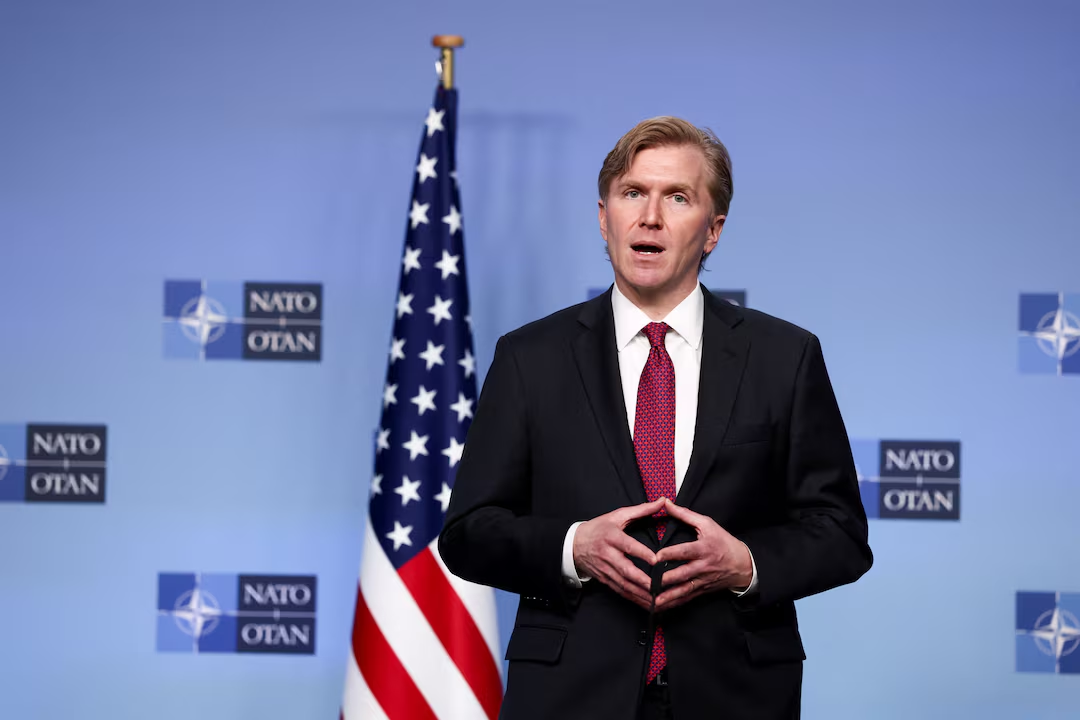
At a high‑level NATO meeting in Brussels, the Pentagon’s policy chief Elbridge Colby emphasized that the alliance should be built more on partnership rather than dependency, urging European allies and Canada to continue increasing their military spending to become equal contributors. Colby argued that NATO’s credibility depends on shared responsibility, not on the United States carrying the bulk of the burden. He noted that in 2025 there was already “a genuine commitment to have Europe lead the conventional defence of NATO,” and that this trend must continue if the alliance is to remain strong and balanced.
Colby’s remarks come at a time when NATO is reassessing its force posture and strategic priorities amid heightened tensions with Russia and growing instability in the Middle East. The U.S. has long pressed allies to meet the 2% of GDP defense spending target, but Colby’s framing suggests a shift from simply meeting spending quotas to building a more equal partnership where Europe takes greater responsibility for its own defense.
The issue of dependency has been a recurring theme in NATO debates. For decades, Washington has shouldered much of the alliance’s military power, while many European states relied heavily on U.S. protection. Colby’s call reflects a broader push within the Pentagon to encourage Europe to develop stronger conventional forces, reduce reliance on American assets, and ensure that NATO’s deterrence posture is credible in the face of modern threats.
This message also resonates politically. With U.S. domestic debates questioning the costs of overseas commitments, the Pentagon is signaling that NATO’s future must be one of shared burdens and equal footing. For European leaders, this means not only boosting defense budgets but also investing in capabilities that can operate independently and complement U.S. forces.
The Brussels meeting highlighted both opportunities and challenges. On one hand, increased European spending and initiatives like joint procurement show progress toward partnership. On the other, skepticism remains about whether all allies will follow through, and whether political will can sustain the momentum.
Ultimately, Colby’s intervention underscores a pivotal moment for NATO: the alliance must evolve from a structure where the U.S. is the dominant guarantor to one where all members contribute meaningfully. If successful, this shift could strengthen NATO’s resilience and credibility in an era of renewed geopolitical competition.











Leave a comment