


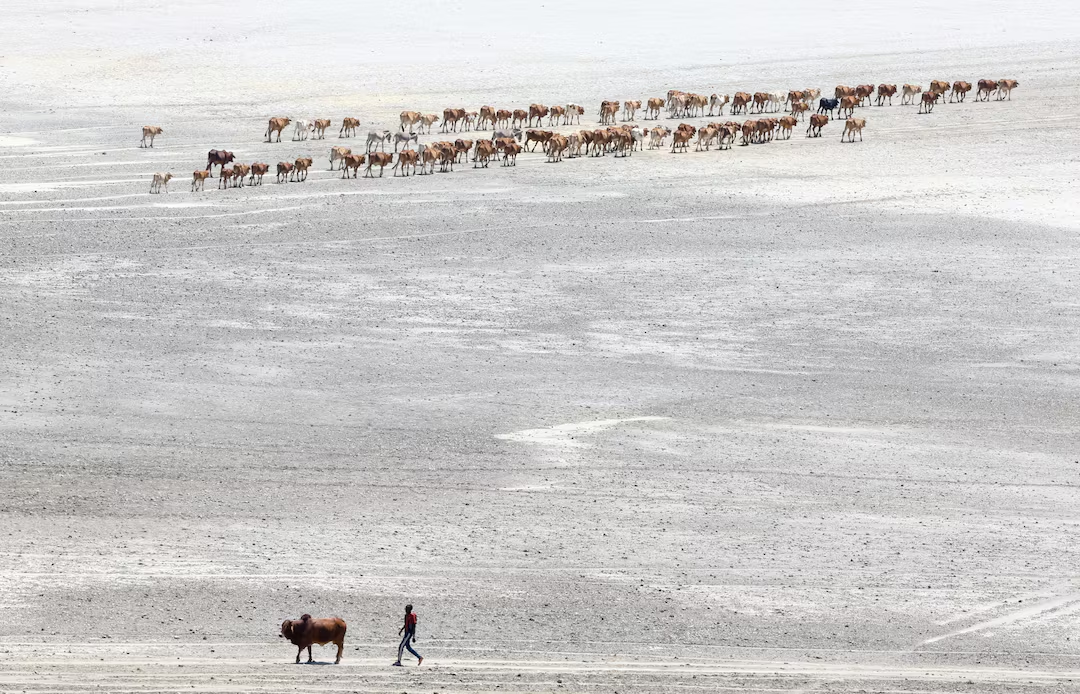
A deepening drought is spreading beyond Kenya’s traditionally arid northern regions, pushing pastoral communities in new areas into a growing humanitarian and economic crisis as water sources dry up and pasturelands deteriorate. Communities that once relied on predictable seasonal rains are now facing prolonged dry spells that are devastating livestock, disrupting livelihoods, and intensifying food insecurity.
Herders across central and eastern parts of the country say grazing routes that were once reliable are now barren, forcing families to travel longer distances in search of water and pasture. The movement of livestock into unfamiliar territories has heightened tensions between communities competing for limited resources, raising fears of conflict over access to land and water. Local leaders warn that the situation is becoming increasingly unsustainable, particularly for small scale pastoralists who lack the resources to adapt quickly.
Livestock losses are mounting as weakened animals succumb to dehydration and disease. For many families, cattle, goats, and camels represent their primary source of income, food, and social security. The death of herds is not only a financial blow but also a cultural and emotional loss for communities whose identities are closely tied to pastoral life. Markets in drought affected areas have seen falling livestock prices as desperate herders attempt to sell animals before they die, further reducing household income.
Humanitarian organisations report rising malnutrition levels, especially among children and pregnant women, as food supplies shrink and milk production declines. Water scarcity has forced some families to rely on unsafe sources, increasing the risk of waterborne diseases. Schools in affected regions are also experiencing declining attendance as children accompany parents on long journeys to find grazing land or water points.
Climate experts say the expansion of drought into previously less affected regions reflects broader shifts linked to climate variability and changing weather patterns. Erratic rainfall, higher temperatures, and prolonged dry seasons are placing increasing pressure on Kenya’s agricultural and pastoral systems. While emergency food aid and water trucking operations have been deployed in some areas, aid agencies stress that long term solutions such as climate resilient infrastructure, improved water management, and diversified livelihoods are urgently needed.
The Kenyan government has acknowledged the growing crisis and is working with international partners to scale up early warning systems, expand social protection programmes, and invest in drought resistant agricultural practices. However, local officials say more support is required to reach remote communities that are now experiencing severe conditions for the first time.
As drought conditions continue to spread, herders face difficult choices about migration, herd management, and survival. Without sustained intervention and climate adaptation measures, analysts warn that the crisis could deepen, threatening not only rural livelihoods but also national food security and economic stability.












Leave a comment