


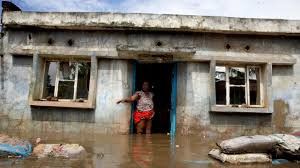
Researchers have confirmed that human-driven climate change worsened the recent torrential rains and floods that devastated parts of southern Africa, killing over 100 people and displacing more than 300,000, while causing widespread destruction to homes and infrastructure.
A study by World Weather Attribution analyzed the extreme rainfall that struck South Africa, Mozambique, and Zimbabwe, showing that the region received the equivalent of a year’s worth of rain in just ten days. The floods submerged entire neighborhoods in Mozambique and swept away roads, bridges, and other infrastructure across South Africa’s Limpopo and Mpumalanga provinces, as well as parts of Zimbabwe. The damage is estimated to run into millions of dollars, while the human suffering, including the tragic loss of lives, has been profound.
The study, conducted by an international team of scientists using peer-reviewed methods, highlights that such extreme rainfall events, historically considered once-in-50-year occurrences, are becoming more frequent and intense. This trend, the researchers say, is a direct result of global warming exacerbating natural weather phenomena, such as the ongoing La Niña event, which naturally brings wetter conditions to southern Africa.
“Our analysis clearly shows that our continued burning of fossil fuels is not only increasing the intensity of extreme rainfall, but turning events that would have happened anyway into something much more severe,” said Izidine Pinto, senior climate researcher at the Royal Netherlands Meteorological Institute and co-author of the study.
Pinto explained that climate models indicate the intensity of the recent rains increased by roughly 40% due to human activity, a level impossible to attribute solely to natural variability. “It means what would have already been a serious period of heavy rain has been transformed into a more violent deluge that communities are not equipped to deal with,” he said.
The study underscores the urgent need for climate adaptation and mitigation strategies in southern Africa and other vulnerable regions. With rising global temperatures, scientists warn that communities will face increasingly extreme weather events, compounding existing socio-economic vulnerabilities and threatening human lives, livelihoods, and infrastructure.
This analysis adds to mounting evidence linking climate change to the frequency and severity of extreme weather, emphasizing the global stakes of ongoing greenhouse gas emissions.











Leave a comment