


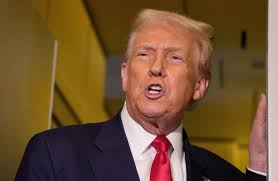
Former United States President Donald Trump has escalated his rhetoric on Nigeria, warning that Washington could carry out repeated military strikes if violence against Christians continues in the country. His remarks followed questions about a US military strike conducted on Christmas Day in northwest Nigeria.
At the time, the US military said the operation targeted Islamic State militants and was carried out at the request of the Nigerian government. Nigerian authorities described the action as a joint operation against terrorists and stressed that it had no religious motivation, emphasising that the fight was against armed extremist groups rather than any faith community.
Trump, however, framed the issue largely in religious terms. He was quoted as saying that while he would prefer such military action to be a one time event, continued attacks on Christians would lead to repeated strikes. His comments reflect a broader narrative he has advanced in recent months, portraying Christian communities in Nigeria as being under existential threat.
When challenged with statements from his own Africa adviser, who had noted that extremist groups such as Islamic State and Boko Haram have killed more Muslims than Christians in Nigeria, Trump partially acknowledged Muslim victims but insisted that Christians were the primary targets. He said Muslims were also being killed, but maintained that the violence was mostly directed at Christians.
Nigeria has long struggled with insecurity driven by jihadist insurgencies, banditry and communal violence, particularly in the north and central regions. While religious identity often overlaps with these conflicts, Nigerian officials and many analysts argue that the violence is rooted in a complex mix of extremism, criminality, land disputes and weak governance, rather than a single religious agenda.
Trump first raised the possibility of US intervention in late October, accusing Nigeria’s government of failing to protect Christian communities. His statements have drawn concern from observers who warn that oversimplifying Nigeria’s security crisis risks inflaming tensions in a country where Muslims and Christians have coexisted for decades.
As Nigeria continues its battle against insurgent groups, the remarks highlight the sensitive intersection of international security policy, domestic politics and religious identity. They also underscore the potential diplomatic strain such statements could place on US Nigeria relations, particularly if military action is framed along religious lines rather than counterterrorism cooperation.






Leave a comment