


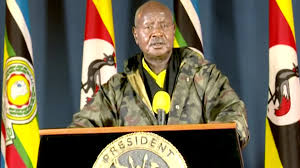
Uganda’s government has announced a ban on live broadcasts of riots, unlawful processions, and other violent incidents as the country moves closer to a highly contested presidential election scheduled for January 15. The directive comes amid heightened political tension, mass arrests of opposition supporters, and growing scrutiny of the state’s approach to media freedom and civil liberties.
The election will once again pit President Yoweri Museveni, 81, against opposition leader Bobi Wine, the 43 year old musician turned politician whose popularity among young voters has posed a sustained challenge to the ruling establishment. Museveni, who has ruled Uganda for nearly four decades, is seeking to extend his long tenure in office, while Wine represents a generational shift and a broader demand for political change.
Government authorities justified the broadcast restrictions as a necessary measure to maintain public order and prevent the escalation of violence. Officials argue that live coverage of unrest could inflame tensions, encourage copycat actions, and undermine national security during a sensitive electoral period. Under the directive, media houses are prohibited from airing real time footage of riots or violent demonstrations, although recorded and edited reports may still be permitted under strict regulatory oversight.
The announcement follows a wave of detentions targeting opposition supporters across the country. Hundreds of individuals linked to the opposition have reportedly been arrested in the weeks leading up to the vote, raising concerns among human rights organisations and election observers. Critics say the arrests, combined with restrictions on live broadcasting, form part of a broader strategy to limit dissent and control the political narrative ahead of polling day.
Opposition figures and civil society groups have condemned the ban, describing it as an attack on press freedom and the public’s right to information. They argue that live reporting plays a critical role in transparency, accountability, and the protection of civilians, particularly during elections that have historically been marred by allegations of violence and irregularities. For many journalists, the directive introduces uncertainty about what constitutes prohibited content and increases the risk of sanctions, self censorship, or closure of media outlets.
Uganda has a long history of contested elections, with past polls frequently accompanied by security crackdowns, internet restrictions, and limits on political assembly. Bobi Wine has previously accused the government of intimidation and repression, claims the authorities consistently deny, insisting that security measures are lawful and aimed at preserving stability.
As the election approaches, the broadcast ban has become a focal point in the wider debate about democratic space in Uganda. International observers and diplomatic partners are expected to closely monitor both the conduct of the polls and the government’s treatment of opposition parties, media organisations, and voters.
The coming days will be crucial in determining whether the election unfolds peacefully and credibly, or whether the restrictions and arrests further deepen political divisions in a country already under significant strain.






Leave a comment