


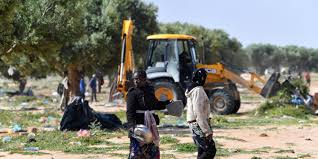
A highly controversial trial has opened in Tunisia involving humanitarian workers accused of aiding migrants, deepening concerns over the country’s treatment of civil society organisations and vulnerable migrant communities.
Six staff members of the Tunisian branch of the French aid organisation France Terre d’Asile, alongside 17 municipal employees from the eastern city of Sousse, are facing criminal charges for allegedly sheltering migrants and facilitating their illegal entry and residence in the country. If found guilty, the defendants could face prison sentences of up to ten years.
Tunisia has long served as a major transit point for tens of thousands of migrants attempting to reach Europe, making migration one of the country’s most politically sensitive issues. Authorities argue that the case is part of efforts to enforce national laws governing migration. However, human rights groups insist the prosecution represents a dangerous criminalisation of humanitarian work.
Among those on trial is Sherifa Riahi, the former head of Terre d’Asile Tunisie, who has been detained for more than 19 months, according to her legal team. Her prolonged detention has drawn sharp criticism from international rights organisations, which describe the case as emblematic of a broader erosion of civic space in Tunisia.
Amnesty International has strongly condemned the proceedings, calling them a bogus criminal trial and urging Tunisian authorities to immediately drop all charges. The organisation maintains that the accused individuals were carrying out legitimate humanitarian duties, including providing shelter and basic assistance to migrants in distress, rather than engaging in criminal activity.
The arrests and prosecution come against the backdrop of heightened tensions surrounding migration in Tunisia following remarks made by President Kais Saied in 2023. In a speech referring to illegal migrants, the president’s comments were widely criticised for fuelling xenophobia and racial hostility. In the aftermath, thousands of sub Saharan African migrants reported being forcibly evicted from their homes, losing their jobs and facing racially motivated attacks.
Rights groups say the current trial cannot be separated from this broader political climate. They warn that targeting aid workers and municipal employees risks deterring humanitarian assistance at a time when migrants face increasing violence, homelessness and exploitation.
As the case proceeds, it is being closely watched both within Tunisia and internationally. Observers argue that the outcome will be a critical test of Tunisia’s commitment to human rights, the rule of law and the protection of humanitarian action in a region already under immense migration pressure.












Leave a comment