


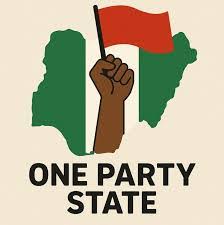
Nigeria’s opposition leaders have raised serious concerns over what they describe as a growing slide toward a de facto one party state, accusing the federal government of using state institutions to intimidate and weaken political rivals ahead of the 2027 general elections.
In a strongly worded joint statement, prominent opposition figures including former Vice President Atiku Abubakar and former presidential candidate Peter Obi alleged that coercion rather than democratic competition is increasingly shaping Nigeria’s political landscape. According to the statement, key government agencies are being weaponised to harass opposition actors, with the country’s main anti corruption body, the Economic and Financial Crimes Commission, cited as a central instrument in this alleged campaign.
The opposition leaders warned that the use of state power for political ends poses a direct threat to Nigeria’s multiparty democracy. They argued that institutions created to uphold accountability and fight corruption are being diverted from their constitutional mandate and redeployed as tools for political persecution. In their view, this trend risks eroding public trust in democratic institutions and undermining the principle of political plurality that underpins Nigeria’s constitutional order.
“Across our nation, there are mounting concerns that state power is being deployed not for the prevention of economic crimes, but for the persecution of perceived political adversaries,” the statement said. The opposition further claimed that the ultimate objective of these actions is to weaken opposition parties, silence dissenting voices and consolidate power within the ruling political structure.
The allegations come at a time of heightened political sensitivity, as parties begin early positioning ahead of the 2027 elections. Nigeria’s political history has been marked by intense rivalry, but also by a long standing commitment to multiparty democracy since the return to civilian rule in 1999. Opposition figures argue that recent developments threaten to reverse these democratic gains by creating an uneven playing field where opposition parties operate under constant pressure from state authorities.
While the government has repeatedly defended the independence of institutions such as the EFCC and insists that investigations are conducted strictly within the law, critics say the timing and targeting of certain actions raise legitimate questions. They contend that selective enforcement, especially when it disproportionately affects opposition figures, fuels perceptions of political bias and institutional capture.
The opposition leaders called on Nigerians, civil society groups and the international community to remain vigilant and to defend democratic norms. They stressed that democracy thrives on competition, accountability and the freedom of citizens to support parties of their choice without fear of intimidation or retaliation.
As Nigeria moves closer to another electoral cycle, the accusations underscore broader concerns about governance, rule of law and the neutrality of state institutions. Whether these warnings translate into reforms or further political tension will likely shape the country’s democratic trajectory in the years leading up to 2027.











Leave a comment