


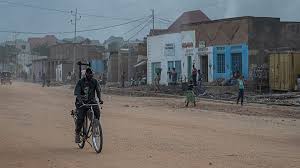
Traces of war now line the road to Uvira, where the latest clashes between M23 rebels and the Congolese army have left deep scars on communities in eastern Democratic Republic of Congo. Villages along the route tell a grim story of civilians caught in the middle of a rapidly escalating conflict, as families fled through gunfire and explosions with little understanding of where the danger was coming from.
Samuel Masikitiko, a resident of Luvungi, about 70 kilometres north of Uvira, described scenes of terror as fighting intensified. He recalled watching civilians die while attempting to escape. Bombs fell among fleeing crowds, killing people instantly. In places like Luberizi and Sange, deaths mounted as shells landed indiscriminately, leaving residents unsure whether the attacks came from rebel forces or the Congolese army.
The Associated Press recently gained rare access to Uvira, Congo’s last major government-held city in South Kivu after the provincial capital, Bukavu, fell to the Rwanda-backed M23 rebels in February. The capture of Uvira is strategically significant, allowing the group to consolidate a wide corridor of influence across eastern Congo, tightening its grip on the region.
Despite a United States mediated peace agreement signed last week in Washington by the presidents of Congo and Rwanda, fear now hangs heavily over the city. Residents say panic spread quickly as fighting erupted. Gunfire echoed through neighbourhoods, forcing many to flee while others were killed in the chaos. Those who survived describe their escape as a matter of luck rather than safety.
Days after the city fell, Uvira remains largely deserted. Streets are silent, broken only by the movement of military jeeps. Banks are closed, businesses remain shut, and most residents have not returned to work. Armed M23 fighters patrol the streets openly, and residents say no one dares to venture out after sunset.
Some residents, however, have chosen to stay despite the uncertainty. Esther Maria, who remains in Uvira, says daily life has yet to resume. With no income and limited movement, families have spent days indoors, waiting and watching, hoping stability might return even as normal routines remain impossible.
M23 says it seized control of Uvira following a rapid offensive that began earlier this month. Regional officials estimate that more than 400 people have been killed and about 200,000 displaced during the latest wave of violence. The humanitarian toll continues to rise as families flee toward safer areas, often with nothing but what they can carry.
The renewed fighting has unfolded despite the recent peace deal, which did not include M23 as a signatory. While Rwanda has agreed to halt support for armed groups, both the Congolese government and the rebels accuse each other of violating previous ceasefire agreements. The rebels’ continued advance has pushed the conflict dangerously close to neighbouring Burundi, raising fears of a wider regional escalation.
On Friday, the United States accused Rwanda of breaching the peace accord by backing a renewed rebel offensive and warned that action would be taken against those undermining the agreement. For civilians in and around Uvira, however, diplomatic warnings offer little immediate comfort as they navigate a city transformed by fear, silence, and uncertainty.






Leave a comment