


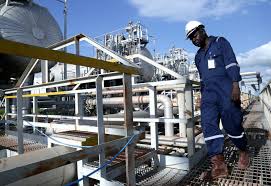
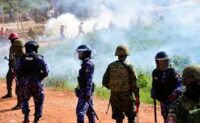
South Sudanese troops have taken control of the Heglig oilfield in a rare and unprecedented arrangement designed to shield vital energy infrastructure from Sudan’s worsening civil war. The deployment, confirmed on Wednesday, follows a dramatic escalation in the conflict after the Rapid Support Forces seized the highly strategic site on December eight.
The Heglig oilfield, a lifeline for both Sudan and South Sudan, has long been considered one of the most sensitive and economically pivotal installations in the region. Its sudden capture by the RSF forced units of the Sudanese Armed Forces to retreat across the border into South Sudan, where they reportedly surrendered their weapons. The retreat underscored the scale of the RSF’s recent territorial gains and the increasing fragility of Sudan’s fractured military landscape.
Faced with the risk of damage, sabotage or further militarisation of the oilfield, authorities in both countries agreed on an extraordinary cross border security arrangement: South Sudan’s military would take over protection of Heglig until conditions stabilise. Officials familiar with the decision said the priority is to ensure uninterrupted oil production and to prevent the conflict from spilling further into South Sudanese territory.
The deployment marks the first time since South Sudan’s independence in 2011 that its forces have been formally invited to assume operational control of a major asset located within Sudanese territory. It reflects the urgency of safeguarding infrastructure that not only anchors South Sudan’s oil dependent economy but also provides critical revenue to Sudan through existing export agreements. As Sudan’s civil war continues to destabilise the region, both governments recognise that the loss or destruction of Heglig would carry devastating economic repercussions.
The RSF’s capture of Heglig forms part of a broader advance across parts of South Kordofan and West Kordofan, heightening fears about the collapse of already vulnerable communities and the erosion of state control. With the conflict entering its second year, humanitarian agencies have warned that millions more could be pushed into displacement, famine and insecurity as front lines shift unpredictably.
South Sudan’s intervention is also being interpreted as a pragmatic effort to contain the risk of conflict spillover. The country remains acutely fragile after years of its own civil war, and any instability along its northern border could ignite fresh tensions or widen humanitarian pressures. By stepping into Heglig, Juba aims to create a buffer against militarised chaos while honouring bilateral commitments between the two nations.
Regional actors are watching the situation closely, particularly given the complex relationship between the SAF, RSF and South Sudan’s government. Diplomatic efforts led by the African Union and IGAD have struggled to secure meaningful ceasefires or humanitarian access, making the protection of critical infrastructure a priority amid an otherwise rapidly deteriorating landscape.
While the agreement signals rare cooperation during a period of profound instability, analysts caution that the arrangement is temporary and subject to the unpredictable dynamics of Sudan’s conflict. For now, however, South Sudan’s deployment at Heglig stands as a strategic intervention designed to protect shared economic assets, prevent further regional destabilisation and preserve one of the last functioning pillars of Sudan and South Sudan’s intertwined economies.








Leave a comment