


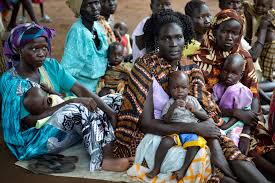
The conflict in Sudan has forced countless families to flee their homes in search of safety. Among them are thousands of women who now live as refugees in Chad, carrying invisible wounds that run deeper than the physical journey across the border. For many of these women, wartime violence has left profound emotional scars that are rarely spoken about and even more rarely treated.
In the refugee settlements of eastern Chad, access to mental healthcare is almost nonexistent. Trained psychologists, counsellors, or trauma specialists are extremely limited, leaving survivors to navigate the heavy aftermath alone. Yet in the middle of this silence and suffering, Sudanese women are carving out their own path toward healing.
What has emerged is a powerful network of informal support. Women gather under makeshift tents, trees, or small meeting spaces to share their stories, pray together, and comfort one another. These circles have become safe spaces where grief, fear, shame and anger can finally be expressed without judgment.
Many survivors say these gatherings help them breathe again. Some describe it as the first time they have felt understood since fleeing the violence. Others emphasize the strength that comes from knowing they are not alone in their experience. Slowly, conversation by conversation, they are rebuilding their sense of self.
Community leaders, women’s groups and volunteers play a vital role in holding these networks together. They mediate discussions, offer emotional guidance, and create an environment where trust can grow. Even without formal training, their presence is often the closest thing to therapy available.
The story of Sudanese women in Chad is a reminder of how conflict reshapes lives long after the fighting stops. It also highlights the resilience of women who refuse to be defined by their trauma. In the absence of structured mental health services, they are becoming each other’s lifeline, choosing solidarity in the face of despair.
Their courage calls for greater international attention. With the right support, from humanitarian agencies to mental health professionals, these grassroots healing efforts can become even stronger. For now, the women continue to hold one another up, proving that even in displacement, community can become a pathway to hope.










Leave a comment