


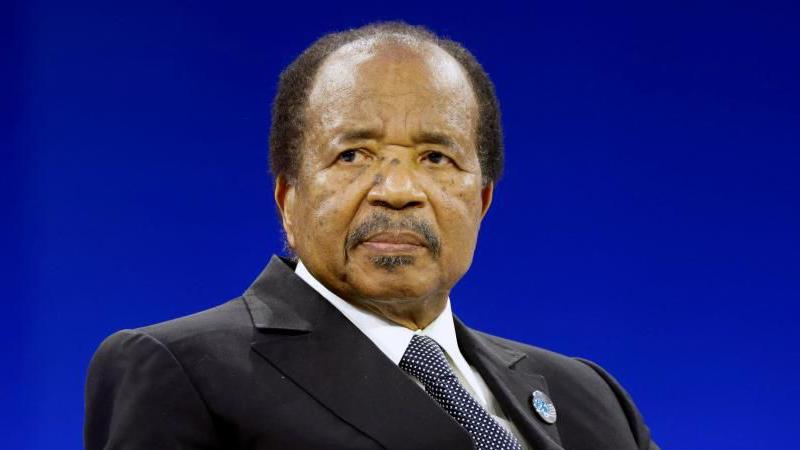
Cameroon’s long-serving president, Paul Biya, has secured a controversial eighth term in office, extending his four-decade rule in a nation increasingly divided by political tension and violence. The 92-year-old leader, who is the world’s oldest head of state, was declared the winner with 53.7 percent of the vote, defeating opposition leader Issa Tchiroma Bakary, who garnered 35.2 percent, according to official results announced by the Constitutional Council on Monday.
The outcome has ignited widespread anger and clashes across the country, as opposition supporters reject the results, alleging massive electoral fraud and manipulation by Biya’s ruling Cameroon People’s Democratic Movement (CPDM). The election, held on 12 October, was marred by deadly confrontations, with several lives lost in cities like Douala and Garoua as protesters defied government bans to demonstrate against what they describe as a stolen mandate.
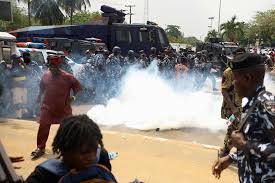
Before the final declaration, Tchiroma Bakary once a close ally of Biya insisted that he had won the election, claiming the ruling party had orchestrated a plot to overturn the will of the people. His supporters took to the streets, holding signs that accused the government of trying to “steal the victory,” while security forces responded with tear gas and live ammunition in several regions. On Sunday, at least four people were killed during demonstrations in Douala, while additional fatalities were reported near Tchiroma’s residence the following day.
In a brief statement following his declared victory, Biya thanked Cameroonians for “once again” placing their trust in him and called for unity. “I sincerely hope that, together, we resolutely undertake to build a peaceful, united, and prosperous Cameroon,” he said. Yet, that message of peace has done little to calm tensions, as cities like Yaoundé remain on edge. Businesses, schools, and government offices have been largely closed amid fears of further violence, with residents describing the capital as being gripped by “graveyard silence.”
Observers note that at least ten petitions alleging electoral malpractice were dismissed by the Constitutional Council, further fueling claims of bias and political interference. Meanwhile, voter turnout stood at 58 percent, signaling both widespread engagement and deep skepticism among citizens.
Many Cameroonians have expressed disillusionment with the result. “We are at the beginning of another nightmare,” said Amungwa Nicodemus, a resident of Yaoundé, lamenting the nation’s struggling economy, rampant corruption, and growing insecurity. Others, like Abolo Denis, urged for calm, saying that “peace is of the utmost importance,” though even he acknowledged the heavy silence that followed the announcement.
Biya’s victory comes at a fragile time for Cameroon, a country once seen as one of Central Africa’s most stable nations but now struggling with separatist violence, economic decline, and youth unemployment estimated at 40 percent. The English-speaking regions of the country have been gripped by an armed insurgency for nearly a decade, while infrastructure continues to deteriorate and dissenting voices face increasing repression.
Having ruled since 1982, Biya’s leadership has long been a study in contrasts — marked by both modernization efforts, such as the expansion of schools and universities, and by deep-rooted political stagnation. His frequent absences from the country and extended stays in Switzerland have often sparked rumors about his health and leadership capacity. Despite this, the CPDM has celebrated his re-election as a “victory under the sign of greatness and hope,” portraying him as a symbol of continuity and stability.
However, analysts warn that this latest win may further weaken his legitimacy rather than strengthen it. “Biya now has a notably shaky mandate given that many of his own citizens don’t believe he won the election,” said Murithi Mutiga, Africa Program Director at the International Crisis Group. “Cameroon faces a dangerous moment, where mistrust in the political system and the use of force to suppress dissent could plunge the country into deeper turmoil.”
As night falls over Cameroon’s cities, the sense of unease is palpable. For many citizens, Biya’s eighth term is not a celebration of democracy but a reminder of how fragile it has become. The question that now looms is whether the aging leader can restore faith in his government or whether his victory marks the beginning of a new chapter of unrest in one of Africa’s most politically complex nations.






Leave a comment