

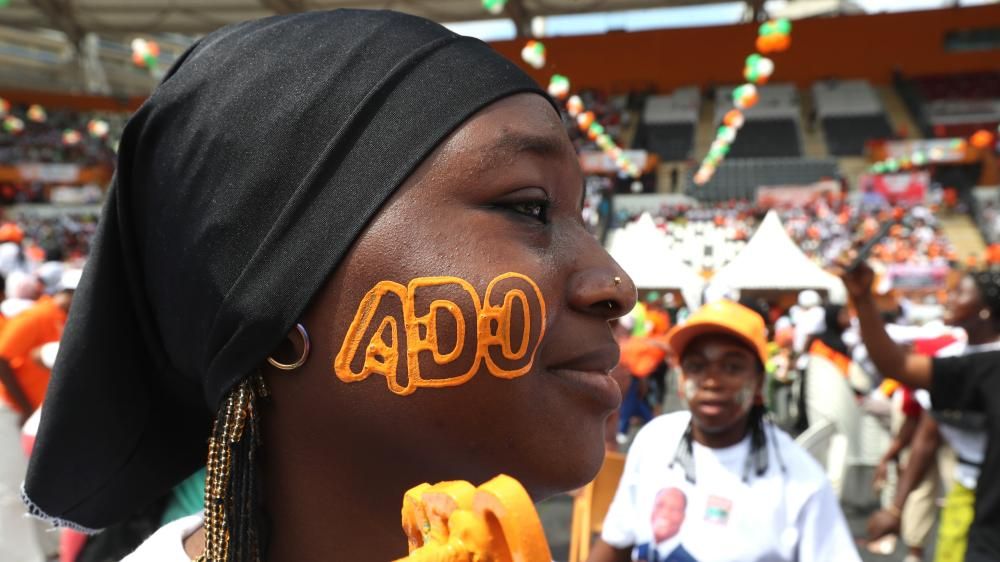
In Ivory Coast, the rhythm of drums and energetic dancing at campaign rallies contrasts sharply with the simmering political tension ahead of Saturday’s presidential election. As music and movement electrify the crowds, deep concerns about democracy and stability ripple through the world’s largest cocoa-producing nation.
The spotlight is on 83-year-old President Alassane Ouattara, whose bid for a fourth term has sharply divided the country. To supporters, Ouattara is a statesman who brought peace, economic growth, and infrastructure after years of civil war. To critics, his decision to run again feels like a betrayal of democratic principles, even though the constitution allows his candidacy.
The election is also notable for the prominent figures who have been barred from contesting. Opposition leader Tidjane Thiam was disqualified in April after a court ruled he had forfeited his Ivorian citizenship when he became a French national in 1987 — a ruling he disputes. Former President Laurent Gbagbo, once Ouattara’s fiercest rival, was also banned due to a 2018 criminal conviction.
It was Gbagbo’s refusal to concede defeat to Ouattara in 2010 that triggered a violent post-election crisis that left over 3,000 people dead and scarred the nation’s memory.
Now, Ouattara faces four challengers, including former First Lady Simone Gbagbo, 76, who has reinvented herself as a fiery opposition leader and symbol of resilience. She is joined by wealthy businessman Jean-Louis Billon, 60, former minister Henriette Lagou Adjoua, 66, and Ahoua Don Mello, 67, another ex-minister with roots in Gbagbo’s camp.
Jean-Louis Billon, one of the country’s richest men and a popular figure among urban youth, has drawn massive crowds in the political capital Yamoussoukro. Known for his charisma and showmanship, he often performs judo moves on stage to demonstrate his energy. “The economy is growing, but not for us,” Billon declares, vowing to make job creation and cost-of-living relief his top priorities.
Simone Gbagbo, once nicknamed “the Iron Lady,” commands attention wherever she goes. Her vibrant presence and ability to connect emotionally with supporters have reignited hope among those frustrated with years of economic inequality. Backed by former youth leader Charles Blé Goudé, Simone has framed her campaign around education, opportunity, and rebuilding national unity. “President Ouattara has done some good things, but he destroyed education,” she says at her rallies, urging Ivorians to choose a new path.
Despite strong opposition voices, Ouattara’s ruling party, the RHDP, remains confident. His rallies, though less animated than in previous elections, still attract large crowds. The hit song Coup du marteau (Hammer Blow) by rapper Tam Paiya has become an anthem for his supporters, who see him as the nation’s steady hand amid uncertainty.
Government officials point to his achievements — new highways, bridges, and international investment — as proof of progress. “The president is in good shape and ready to serve again,” insists government spokesman Adama Coulibaly.
Yet, unrest is brewing. Protests against Ouattara’s candidacy have been met with a heavy crackdown. Over 700 demonstrators were arrested recently, with 50 sentenced to three years in prison. The government’s hardline response has heightened fears of post-election violence, a haunting echo of the past.
Security forces have been deployed across major cities, and many residents are taking no chances. “We’re leaving Abidjan a week before the vote,” said a mother of two. “Each election brings fighting and deaths.”
Still, not all hope is lost. Optimists like Charm Matuba, an Abidjan resident originally from Congo-Brazzaville, believe Ivorians have learned from their painful history. “I know everything will go well. Ivorians don’t want to die again for politicians,” she says. “All my friends support Simone. She’s a leader, a true source of inspiration. She can create the surprise.”
As the nation approaches one of its most pivotal elections, the mood remains a mix of excitement and unease. Music, dance, and promises fill the air but beneath the celebration lies a fragile democracy, tested once again by ambition, loyalty, and the unhealed wounds of the past.





Leave a comment