


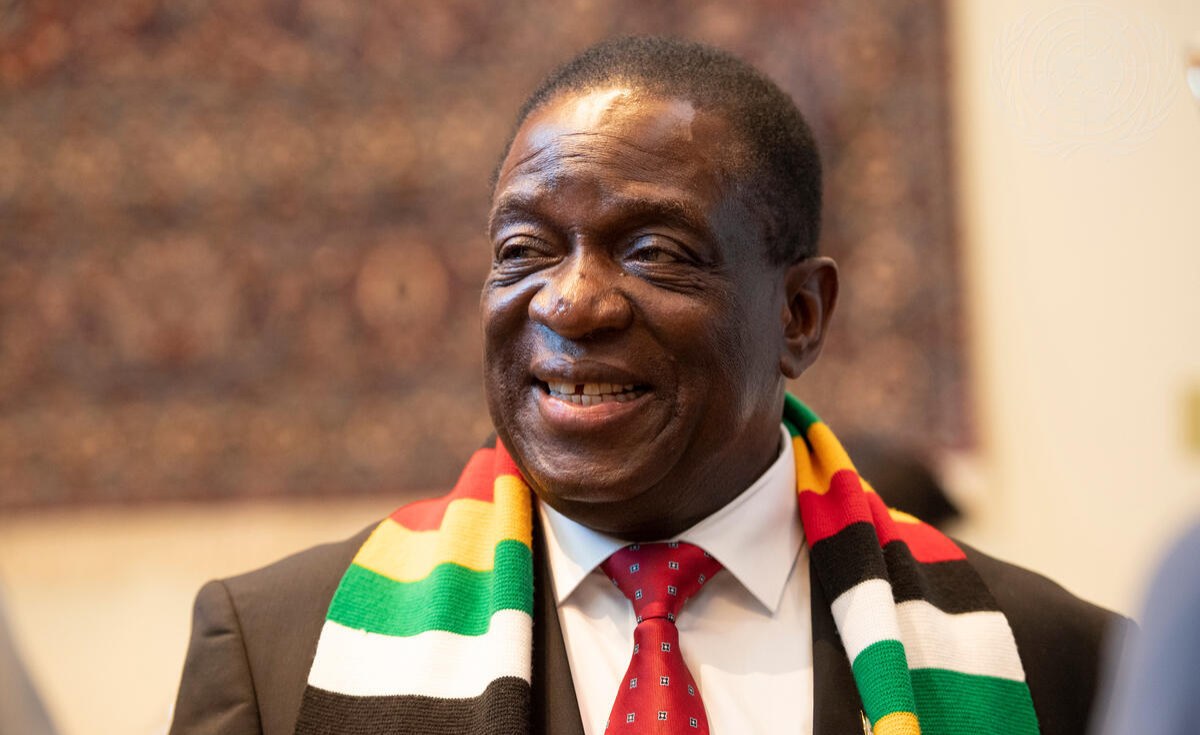
Zimbabwe’s ruling party, ZANU-PF, has announced plans to initiate a constitutional amendment that would extend President Emmerson Mnangagwa’s term in office by two years, potentially keeping him in power until 2030. The move, endorsed at the party’s annual conference in the eastern city of Mutare, signals a significant political development that could reshape Zimbabwe’s governance and fuel growing divisions within the ruling elite.
The decision was revealed by Justice Minister and ZANU-PF legal secretary Ziyambi Ziyambi, who confirmed that delegates at the conference had instructed the government to begin drafting legislation to amend the nation’s Constitution. Under the current law, Mnangagwa, who is 83, is expected to step down in 2028 after serving two elected terms. Any extension would therefore require a constitutional amendment — a process that legal experts say could also demand a national referendum.
Delegates reportedly erupted in applause when the motion to extend Mnangagwa’s tenure passed, reflecting the party’s continued loyalty to its veteran leader. Since independence in 1980, ZANU-PF has maintained a strong grip on power through military influence and tight control of state institutions, including the legislature, giving it a clear advantage in pushing through constitutional changes.
While Mnangagwa has previously declared himself a “constitutionalist” with no desire to cling to power, his loyalists have been quietly campaigning for an extension since last year’s disputed election. The move, however, has exposed deep rifts within the party, particularly between the president’s camp and supporters of Vice President Constantino Chiwenga, who is seen as a potential successor.
Blessed Geza, a veteran of Zimbabwe’s liberation war and an ally of Chiwenga, has been openly criticising the extension bid on social media, warning that it undermines democracy and the legacy of the liberation struggle. Despite his online influence, calls for mass protests against the move have seen limited turnout, largely due to the heavy presence of police and security forces in major cities such as Harare and Bulawayo.
During his closing address at the conference, President Mnangagwa made no reference to the proposed extension, choosing instead to focus on unity and economic recovery. Vice President Chiwenga has also remained silent, deepening speculation about an internal power struggle within the party’s top ranks.
Mnangagwa, who rose to power in 2017 following the ousting of long-time leader Robert Mugabe, initially promised sweeping democratic and economic reforms. However, his administration has since been criticised for presiding over worsening economic conditions, marked by runaway inflation, currency instability, and rising unemployment. Civil society groups and opposition figures accuse his government of using repressive tactics to silence dissent, manipulate elections, and weaken judicial independence.
The opposition has vowed to resist any attempt to alter the Constitution for political gain. Prominent lawyer and opposition figure Tendai Biti described the plan as an “unconstitutional, anti-people agenda” that would erode the rule of law. He warned that legal challenges would be mounted to defend the integrity of the country’s Constitution.
Tensions escalated further when ten elderly activists, mostly in their sixties and seventies, were arrested in Harare on Friday for allegedly planning a protest demanding Mnangagwa’s resignation. Authorities accused them of attempting to incite public violence, and they remain in custody pending a bail hearing. Earlier in the year, nearly 100 young people were detained under similar circumstances, underscoring the shrinking space for civic activism in Zimbabwe.
Analysts say the renewed push to extend Mnangagwa’s rule reflects an intensifying struggle for power within ZANU-PF. One faction believes the president’s leadership ensures stability, while another faction, aligned with Chiwenga, views 2028 as the time for a generational transition. As these competing interests collide, Zimbabwe finds itself at another crossroads torn between promises of constitutionalism and the realities of entrenched political control.








Leave a comment