


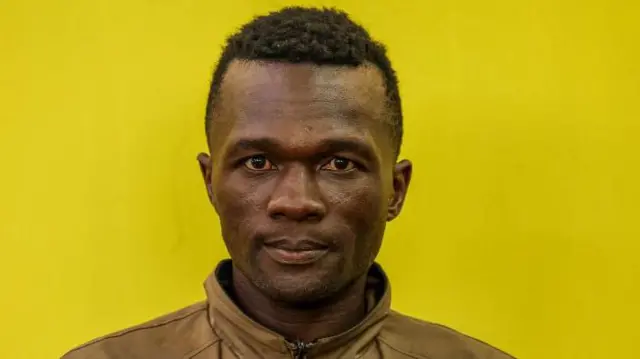
Kenyan authorities have announced a cash reward of 1 million shillings ($7,700; £5,700) for information leading to the arrest of Collins Jumaisi Khalusha, a suspected serial killer accused of murdering more than 40 women in Nairobi. The move comes more than a year after Khalusha escaped from police custody, sparking widespread anger, criticism of law enforcement, and renewed calls for justice for the victims and their families.
Khalusha had been arrested in connection with one of Kenya’s most shocking murder cases after dozens of mutilated female bodies, aged between 18 and 30, were discovered in a disused quarry in Nairobi. The site, which became a notorious dumping ground, was located alarmingly close to a police station, just about 100 metres away, raising serious concerns about how authorities failed to detect the killings for so long.
Despite being regarded as a high-profile suspect, Khalusha managed to escape custody on 20 August 2024, in an incident that embarrassed the Kenyan police. Along with 12 other detainees, he cut through a wire mesh roof and scaled a perimeter wall at one of the city’s most secure police stations, situated near the US embassy and UN offices. The dramatic breakout raised questions about negligence, corruption, and possible collusion within the police ranks.
Several officers were arrested following the escape, accused of aiding Khalusha, but they were later released on bail. To this day, Khalusha remains at large, and police have faced accusations of failing to actively pursue him.
Human rights activist Khalid Hussein, who has been closely monitoring the case, accused authorities of showing little interest in pursuing justice for the victims. He alleged that some bodies still lie in the quarry pits, left to rot, and dismissed the recently announced reward as a publicity stunt triggered by mounting criticism. According to him, the offer of a 1 million shillings reward came only after a local Citizen TV documentary reignited public outrage about police inaction.
“So as usual, they feel embarrassed, they think they should do something, and they react and announce 1 million shillings reward. Absolutely useless,” Hussein said.
Public frustration has continued to mount, with many Kenyans demanding accountability from the Directorate of Criminal Investigations (DCI). Police spokesman Michael Muchiri attempted to downplay concerns, saying the DCI had previously explained “the complexities of the matter” and remained “on track to resolving it.” In a recent statement posted on X, the DCI promised to pay the reward to “anyone who provides credible information that will assist in the re-arrest of the suspect.”
Last year, police had also offered a bounty for Khalusha’s capture, though they failed to specify the amount. This renewed pledge has done little to restore public confidence. Many citizens believe law enforcement’s slow progress in solving the case reflects deep-seated problems within Kenya’s criminal justice system.
The case first gained international attention when Khalusha, described by authorities as a “psychopathic serial killer who has no respect for human life,” allegedly confessed to the murders. However, his lawyer, John Maina Ndegwa, later told the court that Khalusha had been tortured into confessing, claiming that he had been strangled and left in anguish during interrogation.
Despite the dispute over his confession, investigators said they had compelling evidence against him and were preparing to charge him with multiple counts of murder before his escape. DCI chief Mohamed Amin declared at the time that Kenya was “dealing with a serial killer” and promised swift justice for the victims.
Instead, Khalusha’s disappearance has left a trail of unanswered questions, grieving families, and growing mistrust in Kenya’s law enforcement. Interior Minister Kipchumba Murkomen last month described the incident as “regrettable” and “a sad story,” acknowledging the embarrassment it caused the government.
With the reward now in place, authorities hope fresh leads will emerge to track down one of Kenya’s most wanted fugitives. For the families of the victims, however, the promise of justice remains painfully distant. Until Khalusha is recaptured and tried, the case continues to symbolize Kenya’s struggles with police accountability, systemic failures, and the haunting legacy of more than 40 women whose lives were brutally cut short.











Leave a comment