


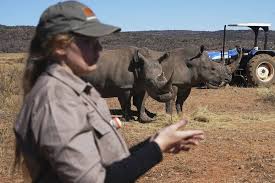
South African scientists have unveiled a groundbreaking anti-poaching initiative that involves injecting rhino horns with a harmless radioactive material to combat the illegal wildlife trade. Developed by researchers at the University of the Witwatersrand, the innovative project aims to make smuggled horns easily detectable by nuclear security systems at borders and customs checkpoints worldwide, providing a powerful new tool in the fight against poaching.
The project, known as the Rhisotope Project, was officially launched after six years of extensive research and testing. In a pilot study involving 20 rhinos, scientists confirmed that the radioactive material is completely safe for the animals while making their horns traceable even inside large shipping containers. “We have demonstrated, beyond scientific doubt, that the process is safe and highly effective,” said Professor James Larkin of Wits University, who co-leads the initiative in collaboration with the International Atomic Energy Agency.
South Africa is home to the world’s largest rhino population, yet it remains a poaching hotspot, with more than 400 rhinos killed annually since 2021, according to conservation group Save the Rhino. Poached rhino horns are highly sought after in Asian markets, where they are used in traditional medicine and as luxury status symbols. This relentless demand has pushed white rhinos into threatened status and left black rhinos critically endangered.
Jessica Babich, head of the Rhisotope Project, emphasized the broader environmental significance of the initiative, stating, “By deploying Rhisotope technology at scale, we are not just protecting rhinos but preserving a vital part of Africa’s natural heritage.”
The success of the project offers renewed hope in the global war against wildlife trafficking. By using nuclear science to outsmart poachers and smugglers, South Africa is pioneering a bold and potentially game-changing approach to saving one of the continent’s most iconic and endangered species.











Leave a comment