


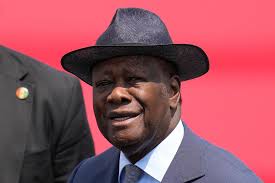
Ivory Coast President Alassane Ouattara has officially declared his intention to run for a fourth term in the upcoming October presidential election, a move stirring controversy and intensifying political tensions across the country.
In his statement, the 83-year-old leader dismissed concerns over his age and health, saying his decision is driven by the need to “preserve national stability amid ongoing security and economic challenges.” Ouattara maintains that the 2016 constitutional changes reset presidential term limits, allowing him to stand again despite already serving three terms.
Ouattara is expected to be the frontrunner in the race, particularly as several key opposition figures have been barred from contesting. Among those excluded are former President Laurent Gbagbo, ex-Prime Minister Guillaume Soro, and former minister Tidjane Thiam.
Thiam and other opposition leaders have condemned Ouattara’s candidacy, describing it as unconstitutional and a “new attack on democracy.” In a statement, Thiam vowed that “the Ivorian people will continue to make their voices heard and show the world what we think of this situation.”
On the same day as Ouattara’s announcement, authorities banned a peaceful protest planned for 7 August. The demonstration, organized by opposition groups, aimed to demand the reinstatement of disqualified candidates and an independent audit of the voter list.
Ouattara, a former banker, is banking on his economic achievements to secure victory. Under his leadership, Ivory Coast’s economy has recorded over 6% growth for four consecutive years. However, despite economic progress, public dissatisfaction with the political establishment remains widespread.
The exclusion of opposition candidates has heightened tensions and revived memories of past electoral crises. The 2010–2011 post-election conflict claimed more than 3,000 lives, while Ouattara’s controversial third-term bid in 2020 triggered violent unrest.
With over 8.7 million registered voters, the October election is set to be one of the most pivotal in recent years. Civil society groups and religious leaders, including the Catholic Bishops’ Conference, have voiced deep concern over escalating political polarization and have called for dialogue to prevent further instability.






Leave a comment