


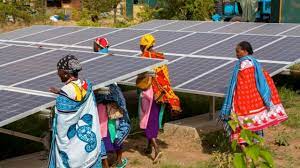
As South Africa continues to grapple with persistent power outages caused by over a decade of load-shedding, solar energy is emerging not only as a sustainable solution but as a lifeline, particularly for vulnerable families and struggling small businesses. For residents like Mark Moodley in Benoni, east of Johannesburg, solar power has become a matter of life and death.
Moodley’s 81-year-old mother, who requires a constant oxygen supply after intensive care treatment, once relied on unreliable electricity and temporary fixes like car batteries. Prolonged blackouts often forced emergency hospital visits. Today, thanks to a domestic solar system, her oxygen concentrator runs uninterrupted, giving the family peace of mind and extending her life. “It’s been a lifesaver,” Moodley says, emotionally.
Despite recent improvements in South Africa’s power grid, blackouts still plague many areas, especially poorer communities. With coal accounting for about 80% of the country’s electricity production, the transition to renewable energy is critical not only for the environment but for public health and economic stability. The crisis has slashed job opportunities and hampered economic growth.
Enter Wetility, a Johannesburg-based solar start-up founded in 2019, which has revolutionized access to clean energy through an affordable, pay-as-you-go model. Instead of requiring large upfront payments—typically between $14,000 and $19,600 Wetility offers packages starting at just $60 per month, making solar energy more accessible to ordinary South Africans.
Moodley, who uses the system, reports saving $80 weekly on electricity bills and hopes to eventually go fully off-grid. Wetility’s solution includes lightweight, theft-resistant solar panels and a secure steel unit housing an inverter and battery. This setup ensures uninterrupted power supply even during long outages and is designed to work efficiently in areas prone to crime or with fragile housing infrastructure.
Small business owners are also benefiting. Julius Koobetseng, a shopkeeper in Krugersdorp, nearly lost his grocery store due to unreliable electricity. Spoiled meat and dairy products were becoming too costly to replace. Since switching to Wetility’s solar system in March, Koobetseng has maintained refrigeration, improved stock management, and seen business pick up. At $250 a month, the investment has already paid off in stability and growth.
While diesel generators remain a fallback for some, the environmental and long-term cost benefits of solar make it an increasingly attractive option. Wetility’s approach offering thin-film panels that stick to rooftops and tear if tampered with helps alleviate fears of theft, a common concern in township communities.
Company founder Vincent Maposa, a former energy analyst, explains that traditional access to electricity means little if the power is unaffordable or unreliable. “We had to develop products that are both fit-for-purpose and financially accessible,” he says.
With more households and businesses turning to solar in a country with abundant sunshine, renewable energy could redefine energy equity in South Africa. But the gap remains stark, solar remains out of reach for many low-income families without creative financing models like Wetility’s.
As South Africa continues its slow transition from coal to cleaner energy, companies like Wetility are proving that solar power isn’t just about sustainability it’s about survival, resilience, and a brighter, more reliable future.









Leave a comment