


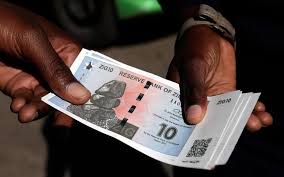
The Reserve Bank of Zimbabwe (RBZ) has officially ended its rigid enforcement of exchange rate controls in a landmark policy shift designed to restore market confidence, enhance economic predictability, and allow the Zimbabwe Gold (ZiG) currency to gain traction through free-market dynamics. This strategic move, enacted through Statutory Instrument 34 of 2025, repeals controversial regulations that previously authorized the Financial Intelligence Unit (FIU) and Zimbabwe Republic Police (ZRP) to arrest traders for pricing goods more than 10% above the official exchange rate.
These now-repealed measures led to widespread arrests, fines, and intimidation, destabilizing the business climate and eroding trust in the nation’s monetary system. Deputy Governor Dr. Innocent Matshe confirmed that the RBZ would no longer dictate exchange rates through coercion, signaling the end of a centralised, heavy-handed approach.
“We want the market players to drive activity, not the central bank or its agents. The heavy-handedness is gone. You will never see it again,” Dr. Matshe stated.
Zimbabwe’s economic history has been marred by distortive state controls that spurred parallel markets and strangled formal commerce. Though initially aimed at achieving price stability, these controls distorted currency valuations, inhibited growth, and discouraged investment. By liberalising the exchange regime, the RBZ is now placing its faith in supply-and-demand mechanisms to determine the true value of the ZiG.
However, this market transition is not without hurdles. Commercial banks continue to levy high foreign currency premiums, often exceeding the interbank rate—an issue that Dr. Matshe acknowledged as a growing pain of market liberalisation. Despite this, positive signs are emerging: retailers such as TM Pick n Pay and OK Zimbabwe are offering stable ZiG exchange rates closely aligned with the interbank average, boosting predictability for both businesses and consumers.
Liquidity constraints remain a serious concern. Many businesses still struggle to access sufficient foreign and local currency, raising fears that, without adequate capital flow, the new system could falter. Nonetheless, the RBZ remains optimistic. Dr. Matshe highlighted narrowing exchange rate premiums as an indicator of strengthening public confidence and reiterated that Zimbabwe possesses ample foreign currency reserves.
The ZiG, launched with the backing of gold and precious metals, has faced skepticism from a population still wary after years of hyperinflation, monetary collapses, and inconsistent policy. Dr. Matshe admitted to a lingering “deficit of trust and confidence,” which he said contributes to the premium observed in informal currency markets, where the rate can exceed ZiG37 per US dollar.
Economists broadly agree that removing artificial controls is a step in the right direction, likely to promote export competitiveness, pricing transparency, and investment appeal. Still, the path forward is fraught with potential volatility. Without improved liquidity and robust oversight, the system risks instability and further entrenchment of the informal market.
To mitigate these risks, the RBZ is developing new monetary tools to strengthen the foreign exchange market while balancing liberalisation with macroeconomic stability. Crucially, the long-term success of the new regime will depend on disciplined central bank operations, a firm halt to excessive money printing, and transparent policymaking aimed at rebuilding public trust.
As Zimbabwe turns the page on coercive economic controls, the challenge ahead is ensuring that this bold embrace of market forces leads to sustainable growth, investment, and lasting financial stability.










Leave a comment