


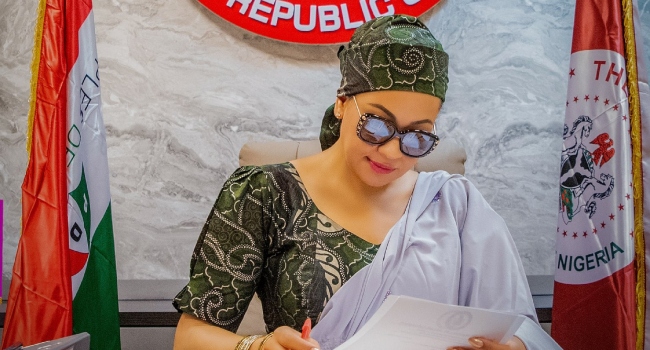
In a high-profile legal battle shaking Nigeria’s political landscape, Senator Natasha Akpoti-Uduaghan faces defamation charges for alleging that Senate President Godswill Akpabio and former Kogi State Governor Yahaya Bello plotted to “eliminate” her. The accusations, made during a live Channels TV interview in April 2025, have escalated tensions in Nigeria’s Senate, spotlighting issues of gender equality and political retribution in the socially conservative nation.
The Nigerian government, through the Attorney General, filed charges at the High Court, asserting that Akpoti-Uduaghan’s claims harmed the reputations of Akpabio and Bello, both of whom deny the allegations. The charge sheet, reviewed by the BBC, specifically cites Akpoti-Uduaghan’s statement about “discussions that Akpabio had with Yahaya Bello… to eliminate me.” No court date has been set, and Akpoti-Uduaghan has not publicly commented on the charges.
This case follows Akpoti-Uduaghan’s earlier accusation in February 2025, where she claimed Akpabio sexually harassed her—an allegation he also denies. The Senate’s ethics committee responded by suspending her for six months without pay, citing “unruly and disruptive” behavior during debates over her claims. Akpoti-Uduaghan and her supporters argue the suspension was retaliation for her allegations, with the senator telling the BBC in March that the Senate “operates like a cult.” She also expressed fears for her safety and that of her two-year-old child after her security detail was withdrawn.
As one of only four female senators among 109, Akpoti-Uduaghan’s case has sparked widespread debate. Social media posts on X highlight public division, with some users praising her courage and others questioning her claims’ credibility. The controversy underscores Nigeria’s gender disparities, where women hold just 3.7% of Senate seats, and raises concerns about freedom of speech and political accountability.
The ongoing saga has gripped Nigeria, with many awaiting the court’s decision and its implications for gender dynamics and political discourse. For the latest updates on this case and Nigeria’s political developments, follow trusted news sources like the BBC and Channels TV.







Leave a comment