


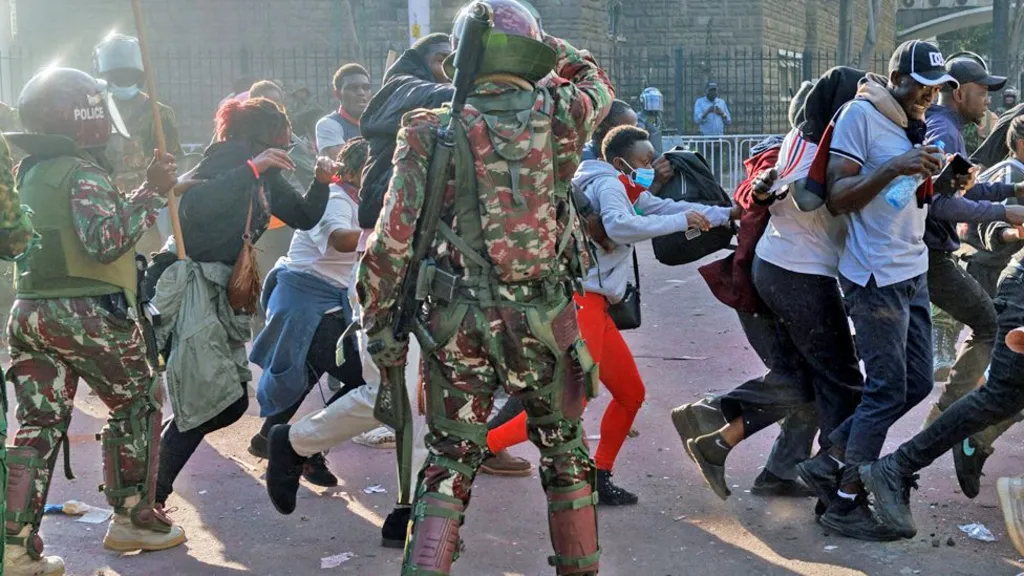
Pressure is mounting on the Kenyan government to investigate alleged extrajudicial killings by security forces during the June 2024 anti-tax protests, following a damning exposé by BBC Africa Eye. The 37-minute documentary titled Blood Parliament revealed harrowing footage and analysis of uniformed police and military personnel opening fire on unarmed protesters, resulting in the deaths of at least three individuals at Kenya’s Parliament grounds.
The protests erupted in Nairobi on June 25, 2024, after over 100,000 demonstrators, mostly youth, took to the streets to oppose a controversial finance bill that proposed steep tax hikes. The bill aimed to generate $2.7 billion (approximately £2 billion) to reduce Kenya’s dependence on external loans. The protests—dubbed the #OccupyParliament movement—quickly turned deadly, with Amnesty International reporting at least 65 deaths, 89 cases of forced disappearance, and the arrest of thousands. The Kenyan government, however, acknowledges 42 deaths.
BBC’s investigation used open-source intelligence (OSINT) techniques and analyzed more than 5,000 images and videos, successfully identifying members of the police and military as those responsible for firing live rounds into the crowd. The exposé sparked public outrage and demands for accountability, with rights groups such as Amnesty International and the Kenya Human Rights Commission (KHRC) calling for the immediate prosecution of those involved.
Amnesty International said the documentary aligns with its earlier findings that Kenyan security forces used “unnecessary and excessive lethal force” against peaceful demonstrators. The KHRC described the armed personnel as “organised criminals in police and military uniforms” and accused the government of deploying them to suppress dissent. The group held President William Ruto directly responsible, demanding a full public inquiry into the killings.
Despite the public pressure, the Kenyan government has pushed back. Government spokesperson Isaac Mwaura criticized the BBC documentary for being “one-sided,” arguing that it failed to show the destruction and vandalism that occurred during the protests. He acknowledged the demonstrators had legitimate grievances but warned against what he called “anarchy and mayhem.” Mwaura also said the government values every life and that investigations were underway through the Independent Policing Oversight Authority (IPOA), though he dismissed the BBC’s portrayal as inciting unrest.
The IPOA, tasked with investigating police misconduct, confirmed it was probing 60 deaths, of which 41 were caused by gunshot wounds. The authority reported that 22 cases had been completed, 36 were ongoing, and two were before the courts. Additionally, 233 injuries were documented during the protests.
Meanwhile, the Kenya Defence Forces (KDF) stated that it had not received any formal request from IPOA to investigate its officers. The police service added that it could not investigate itself, maintaining that only IPOA had the jurisdiction to do so.
The controversy escalated when the BBC canceled a private screening of the documentary in Nairobi, citing pressure from authorities. Nevertheless, the documentary was made publicly available on BBC Africa’s YouTube channel, where it has continued to fuel calls for justice, particularly among Kenya’s youth.
Reactions from lawmakers have been mixed. MP John Kiarie accused the BBC of advancing a “foreign agenda,” while MP Millie Odhiambo defended media freedom, insisting the government must address the crisis “soberly.” Senator Edwin Sifuna praised the documentary, stating it contained no falsehoods and asserting that confronting uncomfortable truths was essential for justice.
The political climate remains tense, with growing anger online and offline as Kenyans demand answers and accountability. Civil society groups are circulating petitions, calling for a full, independent public inquiry and for those responsible for the killings to be brought to justice.
As the nation grapples with the fallout, international attention is turning toward Kenya’s handling of civil liberties, media freedom, and state accountability. With no security officers charged to date, the spotlight now rests on whether President Ruto’s administration will uphold justice or continue to deflect responsibility amid increasing domestic and global scrutiny.








Leave a comment