


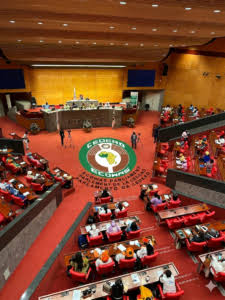
The Economic Community of West African States Parliament has warned that climate action across the region is being slowed by inadequate financing, weak implementation and insufficient political commitment.
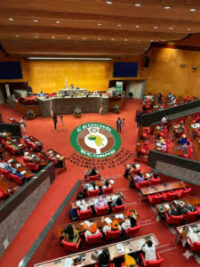
The warning came as the ECOWAS Parliament concluded its Second Extraordinary Session in Accra, where lawmakers examined the links between climate change, environmental degradation, population displacement and growing insecurity across West Africa.
Speaker of the ECOWAS Parliament, Hadja Mémounatou Ibrahima, said the region already had climate strategies and policy instruments, but lacked the resources and political will required to translate them into measurable outcomes.
“Our region doesn’t lack strategies nor instruments,” Ibrahima said, identifying financing and political will as major obstacles to implementation.
The parliament warned that climate change was no longer only an environmental issue. Increasing droughts, floods, coastal erosion and environmental degradation are affecting livelihoods and contributing to displacement, competition over land and water and other pressures that can worsen insecurity.
Guinean lawmaker Bademba Baldé said effective implementation, financing and national ownership were among the main challenges limiting the impact of existing regional climate policies.
Lawmakers called for climate resilience to be incorporated more fully into national budgets, development plans, land use policies, conflict prevention strategies and disaster risk reduction programmes.
The parliament also proposed that ECOWAS leaders consider establishing a regional climate resilience and human security fund to support countries and communities facing climate related risks.
The ECOWAS Commission is expected to develop a five year implementation roadmap to translate the recommendations into practical measures, according to reports from the parliamentary session.
The financing challenge is substantial. ECOWAS estimates that West African countries will require hundreds of billions of dollars to implement their climate commitments, with an estimated $294 billion needed for the region’s nationally determined contributions by 2030.
Ghanaian lawmakers also urged ECOWAS countries to strengthen legislation covering environmental governance, climate adaptation, disaster preparedness and natural resource management. They called for greater investment in climate smart agriculture, renewable energy, water management and coastal protection.
Ghana’s Vice President, Jane Naana Opoku Agyemang, said stronger early warning systems, resilient livelihoods and improved coordination across borders were necessary because environmental pressures in one country could create humanitarian and security challenges in neighbouring states.
The discussions also highlighted the institutional limitations of the ECOWAS Parliament. Nigerian lawmakers Ali Ndume and Awaji N. Abiante argued that the regional legislature’s largely advisory role limits its ability to compel implementation of its recommendations and hold executive institutions accountable.
The lawmakers called for reforms that would give the parliament greater legislative authority, particularly on issues requiring coordinated regional action.
For West Africa, the debate over climate financing comes as governments face increasing pressure to protect vulnerable communities while managing food insecurity, displacement, environmental degradation and security threats. Limited domestic resources and difficulties accessing international climate finance have further complicated implementation.
The parliament’s recommendations therefore place implementation and financing at the centre of ECOWAS climate policy. Turning existing regional commitments into funded programmes will be important if member states are to strengthen resilience and reduce the economic, humanitarian and security consequences of climate change.
The outcome will depend not only on the availability of financing but also on governments’ willingness to incorporate climate resilience into national planning, budgets and development policies and to coordinate responses across national borders.











Leave a comment