


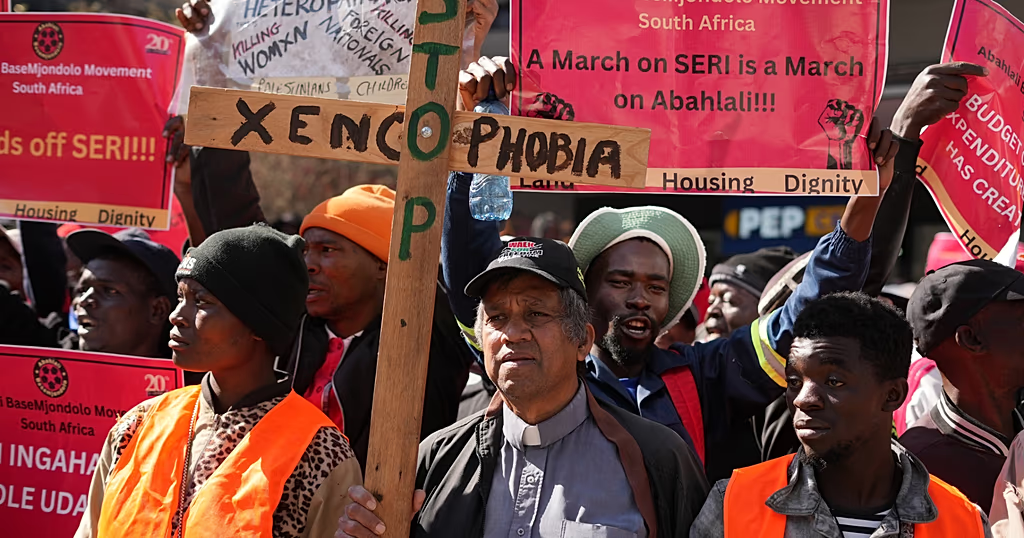
The South African government has called for a continent-wide dialogue on migration, urging African nations to strengthen cooperation in addressing cross-border movement, regional security and economic integration.
Government officials said migration is a shared African challenge that requires coordinated policies rather than unilateral measures. They emphasized the need for stronger collaboration among countries to manage migration in a way that protects human rights while supporting economic development and regional stability.
According to the government, discussions should focus on improving border management, enhancing legal migration pathways, combating human trafficking and strengthening cooperation on refugee protection and labor mobility.
South Africa has long been one of Africa’s leading destinations for migrants, refugees and asylum seekers due to its relatively diversified economy and employment opportunities. However, increasing migration has also fueled debates over public services, employment, border security and social cohesion.
Officials stressed that migration should be viewed as both a challenge and an opportunity, noting that well-managed migration can contribute to economic growth, skills development and regional trade under the African Continental Free Trade Area (AfCFTA).
Policy experts say greater coordination among African governments could improve the management of migration flows, reduce irregular migration and strengthen information-sharing on border security and transnational crime. They also argue that harmonized migration policies would facilitate the movement of skilled workers while supporting regional economic integration.
Human rights organizations have urged governments to ensure that migration policies comply with international legal standards, protecting the rights and dignity of migrants, refugees and asylum seekers. They emphasize that efforts to improve border security should be balanced with humanitarian obligations and access to legal protection.
Development analysts note that addressing the root causes of migration—including conflict, unemployment, climate change and economic inequality—will be essential to achieving long-term solutions. They say increased investment in education, job creation, infrastructure and regional development can help reduce forced migration while creating opportunities within African countries.
The South African government reaffirmed its commitment to working with regional bodies, including the African Union (AU) and the Southern African Development Community (SADC), to develop coordinated migration strategies that promote stability, economic cooperation and sustainable development.
Observers say a continent-wide dialogue could strengthen Africa’s collective response to migration challenges while advancing regional integration, protecting vulnerable populations and supporting inclusive economic growth.










Leave a comment