


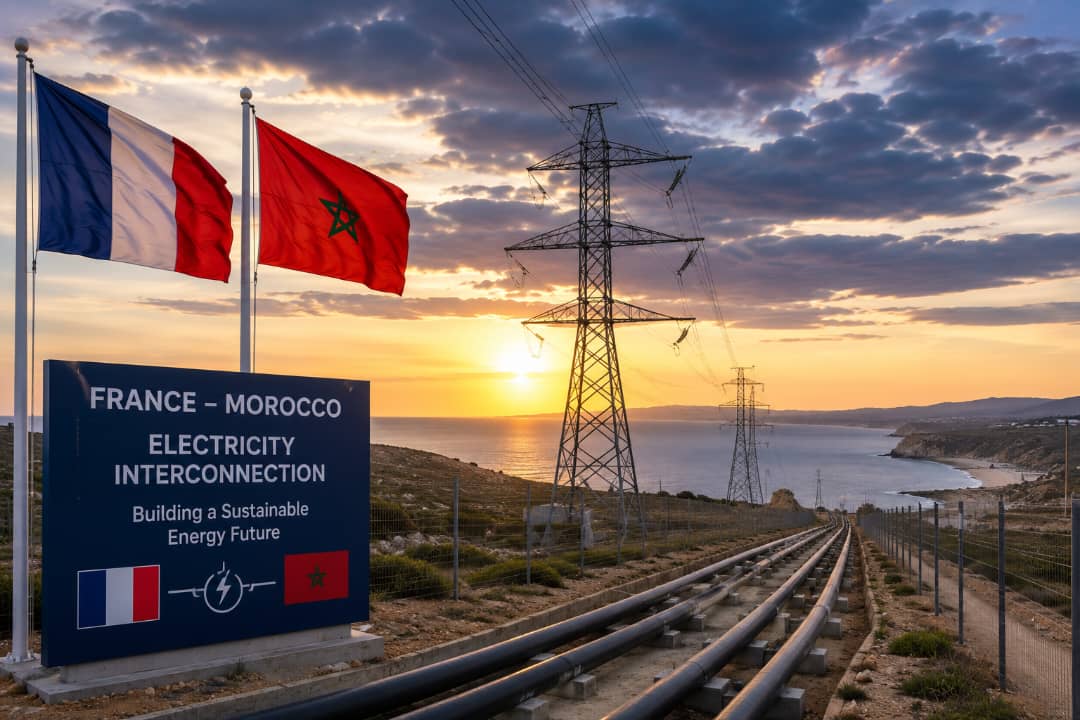
France and Morocco have agreed to advance plans for a direct electricity interconnection, a strategic initiative expected to deepen energy cooperation between Europe and North Africa while supporting the transition to cleaner energy sources.
The proposed project will explore the development of an undersea electricity transmission link capable of transporting renewable electricity generated in Morocco to European markets. Although technical and commercial assessments are still underway, the initiative represents another milestone in Morocco’s ambition to become one of Africa’s leading renewable energy exporters.
The announcement comes as governments across Europe seek to diversify energy supplies, improve energy security and accelerate investments in low-carbon electricity. Morocco has emerged as a strategic partner in this transition due to its significant investments in solar and wind energy over the past decade.
The North African nation has developed one of the continent’s most ambitious renewable energy programmers, supported by favorable climatic conditions, government policy reforms and sustained investment in energy infrastructure. These efforts have positioned Morocco as an attractive destination for international investors seeking opportunities in clean energy generation and transmission.
For France, closer cooperation with Morocco offers an opportunity to diversify electricity imports while strengthening long-term energy partnerships beyond the European continent. The proposed interconnection could also contribute to improving electricity market stability and supporting Europe’s decarbonization objectives.
Beyond the bilateral relationship, the project carries broader significance for Africa’s energy sector. Cross-border electricity infrastructure has become increasingly important as countries seek to improve energy access, reduce carbon emissions and expand regional power markets.
The initiative also reinforces Morocco’s growing role as an investment gateway between Africa and Europe. Improved electricity connectivity could encourage additional investments in renewable energy generation, grid infrastructure, battery storage, green hydrogen production and related manufacturing industries.
Energy analysts note that reliable transmission infrastructure remains essential for unlocking Africa’s renewable energy potential. While several African countries possess abundant solar, wind and hydropower resources, limited transmission capacity continues to restrict opportunities for regional electricity trade and export.
The project aligns with broader efforts to strengthen economic cooperation between Europe and Africa through sustainable infrastructure investments. Development finance institutions, export credit agencies and private investors are expected to play important roles in financing future phases of the initiative if feasibility studies prove successful.
For African businesses, expanding renewable energy exports represents more than an environmental objective. It creates opportunities for engineering firms, construction companies, equipment manufacturers, technology providers and financial institutions participating across the clean energy value chain.
As demand for renewable electricity continues to increase globally, projects that strengthen energy connectivity between Africa and international markets are expected to become increasingly important drivers of economic growth and industrial development.
Why It Matters to Africa
Africa possesses some of the world’s richest renewable energy resources. Developing modern transmission infrastructure will enable African countries to generate greater economic value from these resources while improving energy access, attracting investment and strengthening regional integration.
Projects such as the France–Morocco electricity link demonstrate how clean energy can become both an environmental solution and a catalyst for long-term economic development.
Business Impact
Strengthens Morocco’s position as a renewable energy investment destination.
Creates opportunities in electricity transmission and grid infrastructure.
Supports growth of Africa’s clean energy economy.
Encourages foreign direct investment in renewable energy projects.
Expands opportunities for engineering, technology and manufacturing companies.
Key Takeaways
France and Morocco plan to develop a direct electricity interconnection.
The project will support renewable electricity trade between Africa and Europe.
Morocco continues to strengthen its position as a regional clean energy leader.
The initiative could stimulate investment across Africa’s renewable energy sector.
Improved electricity connectivity supports industrial development and regional economic integration.











Leave a comment