


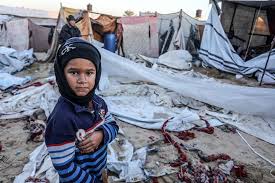
Winter conditions are intensifying the already severe humanitarian crisis in the Gaza Strip, pushing displaced families into increasingly desperate measures to survive. In the Muwasi area of Khan Younis, scenes of hardship have become routine as men, women, and children sift through piles of rubbish in search of plastic, paper, and any other material that can be burned to generate heat or cook food.
With firewood scarce and cooking gas far beyond the reach of most households, families have been forced to rely on improvised fires made from waste. At a nearby dump site, residents use their bare hands to collect scraps that might sustain a flame, regardless of the health risks involved. These materials are then carried back to fragile tents, where small fires are lit to prepare meals and ward off the biting cold of January nights.
Residents say fuel has become one of the most precious and elusive commodities in Gaza. Whatever limited supplies exist are often sold on the black market at prices few can afford. After months of conflict, livelihoods have been destroyed, incomes have vanished, and savings have long been exhausted. For many families, there is no longer a choice between safer and unsafe options, only between burning rubbish or enduring the cold and hunger.
Inside the tents, smoke from burning plastic and other waste fills the air, stinging eyes and lungs. Parents acknowledge the dangers, especially for young children, but insist they have no alternative. The tents themselves offer little protection from the elements, providing minimal insulation against cold winds and rain. As temperatures drop overnight, families huddle together around small fires, trying to preserve warmth in structures never designed for winter living.
Aid organisations operating in and around Gaza have raised serious concerns about the situation. They warn that shortages of adequate shelter, heating fuel, warm clothing, and basic supplies are placing thousands of lives at risk. Children, the elderly, and those with existing health conditions are particularly vulnerable to cold related illnesses and respiratory problems caused by prolonged exposure to smoke and harsh weather.
Humanitarian groups stress that winter has compounded the effects of months of displacement, trauma, and deprivation. Many families have been uprooted multiple times and are now living in overcrowded areas with limited access to clean water, sanitation, and healthcare. The combination of cold temperatures, poor shelter, and unsafe heating methods has created conditions ripe for disease and further suffering.
As winter tightens its grip, residents of Gaza say their daily struggle has become one of sheer survival. For families in Muwasi and across the Strip, the cold is not just a seasonal hardship but another layer of crisis in a conflict that has already stripped them of stability, safety, and dignity. Aid agencies continue to call for urgent assistance, warning that without immediate support, the human cost of winter in Gaza will continue to rise.








Leave a comment