


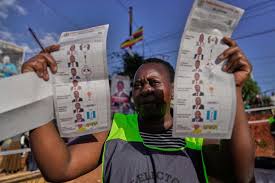
Uganda has been thrown into fresh political tension following inflammatory remarks by the country’s military chief, Muhoozi Kainerugaba, who said he was praying for the death of fugitive opposition leader Bobi Wine and issued him a 48 hour ultimatum to surrender to the police. The comments came in the immediate aftermath of a deeply contested presidential election that has reignited debates about democracy, military influence, and political freedoms in the East African nation.
Bobi Wine, a former pop star turned politician whose real name is Robert Kyagulanyi, emerged as the main challenger to President Yoweri Museveni in last week’s election. Museveni, who has ruled Uganda for nearly four decades, was declared the landslide winner with more than seventy percent of the vote, a result the opposition has strongly rejected. Bobi Wine and his supporters allege widespread irregularities, voter intimidation, and manipulation of the electoral process.
According to Bobi Wine, he went into hiding after security forces carried out a military raid on his home just hours before the official announcement of the election results. He said the operation was aimed at arresting or harming him and described it as part of a broader campaign to silence dissent. Security forces have maintained that they are acting within the law, accusing the opposition of inciting violence and destabilising the country.
The situation escalated when Muhoozi Kainerugaba, who serves as the head of Uganda’s armed forces and is also the son of President Museveni, made public statements calling for Bobi Wine to surrender within 48 hours. His remark about praying for the opposition leader’s death sparked outrage among human rights groups, opposition figures, and international observers, who described the comments as dangerous, irresponsible, and unbecoming of a senior military officer.
Critics argue that the statements highlight the growing role of the military in Uganda’s political life and raise serious concerns about the separation between civilian governance and the armed forces. For many Ugandans, the fact that the army chief is closely related to the president has further fuelled fears of dynastic politics and the militarisation of state power.
In the days following the election, reports have emerged of arrests of opposition supporters, internet restrictions, and heightened security presence in major cities. Civil society organisations say these measures are intended to suppress protests and prevent legal challenges to the election outcome. The government, however, insists that the actions are necessary to maintain law and order and prevent unrest.
Bobi Wine has repeatedly positioned himself as a symbol of generational change, drawing strong support from young Ugandans frustrated by unemployment, corruption, and limited political space. His rise has posed the most serious electoral challenge to Museveni’s rule in years, even as the official results suggest a decisive victory for the incumbent.
The international community is closely watching developments in Uganda, with calls for restraint, respect for human rights, and dialogue between political actors. Analysts warn that inflammatory rhetoric from senior officials risks further destabilising an already tense environment and could undermine Uganda’s regional standing.
As the country navigates the aftermath of the election, the standoff between the state and the opposition underscores deeper questions about Uganda’s political future. Whether the crisis leads to meaningful reform or deeper repression will depend on how authorities respond to dissent and whether space is allowed for peaceful political engagement. For many Ugandans, the coming days will be a critical test of the nation’s commitment to democratic principles and the rule of law.




Leave a comment