


The Democratic Republic of Congo has announced the recapture of Uvira, a key city in South Kivu province, following the withdrawal of Rwanda backed M23 rebels. While the development marks a symbolic and strategic gain for Kinshasa, events on the ground reveal a far more complex and fragile reality, one shaped by lingering rebel threats, civilian suffering, and unresolved regional tensions.
Uvira was seized by M23 fighters in early December, a move that significantly raised the stakes in eastern Congo’s long running conflict. The city is strategically vital, sitting on the shores of Lake Tanganyika and serving as a commercial gateway linking Congo to Burundi and Tanzania. Its fall sent shockwaves through South Kivu, fueling fears that the conflict, which has long plagued North Kivu, was spreading deeper into the region.
Last week, M23 announced it was withdrawing from Uvira and placing the city under the responsibility of the international community. The rebels suggested the move was a response to diplomatic pressure, including a reported request from the United States. However, the announcement was met with widespread skepticism. Residents and local officials said that despite the declaration, M23 police and military elements continued to operate in the city, casting doubt on the sincerity and completeness of the withdrawal.
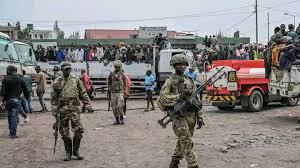
On Sunday, armed groups aligned with the Congolese government, commonly referred to as the Wazalendo, entered southern parts of Uvira. Later that day, Congolese special forces followed, according to government sources. By Monday, authorities formally announced that the city was fully back under state control, presenting the development as a significant victory for the national army and its allies.
The return of pro Kinshasa forces was met with visible emotion from residents. Crowds gathered to cheer the arriving fighters as sporadic gunfire echoed through parts of the city. For many civilians, the scenes reflected hope for relief after weeks of fear and uncertainty under rebel occupation. Yet this sense of optimism was quickly tempered by reports of widespread looting. Multiple local sources confirmed that shops and homes were ransacked during and after the entry of the forces, deepening civilian hardship and reviving concerns about the behavior and discipline of armed groups operating in the area.
Such incidents have once again highlighted a persistent dilemma in eastern Congo, where civilians often find themselves vulnerable regardless of which side controls a territory. Civil society groups and community leaders have called on authorities to investigate the looting and hold perpetrators accountable, warning that abuses by pro government forces risk undermining public confidence and legitimacy at a critical moment.
Despite official statements declaring Uvira secure, South Kivu authorities have warned that the threat posed by M23 remains acute. According to messages circulated to the media, rebel fighters have repositioned themselves in the surrounding hills overlooking the city, where they are believed to have weapons trained on urban areas. This positioning suggests that while M23 may no longer be physically present in Uvira’s streets, it retains the capacity to intimidate the population and potentially launch renewed attacks.
The situation reflects a familiar pattern in eastern Congo, where armed groups frequently withdraw from cities under pressure only to maintain influence from nearby high ground. Such tactical repositioning allows them to preserve military leverage while avoiding direct confrontation, complicating efforts by the state to establish lasting security and governance.
The recapture of Uvira also carries broader diplomatic implications. Kinshasa continues to accuse Rwanda of backing M23, an allegation Kigali strongly denies. Each shift in control on the battlefield feeds into an already strained regional relationship and reinforces calls for stronger international engagement. The rebels’ reference to placing the city under international responsibility further underscores the growing involvement of external actors, even as questions persist about the effectiveness of international mediation and peacekeeping efforts.
For the people of Uvira, the current moment is defined by uncertainty. While the return of Congolese forces represents a reassertion of state authority, the continued presence of M23 fighters nearby and reports of looting have left many residents wary. Whether this latest development marks a turning point or merely another temporary phase in a protracted conflict will depend on the ability of the state to protect civilians, restore order, and prevent armed groups from once again plunging the city into violence.






Leave a comment