


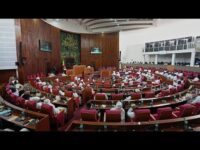
President Patrice Talon’s ruling alliance has consolidated its grip on power after securing full control of Benin’s National Assembly, according to provisional results released by the country’s electoral commission.
The commission announced late Saturday that only two political parties, the Progressive Union for Renewal and the Republican Bloc, won seats in the legislative elections held on January 11. Both parties are firmly aligned with President Talon, effectively shutting out opposition groups from parliamentary representation.
Out of the five parties that contested the vote, none of the opposition formations met the electoral threshold required to enter the assembly. As a result, the new legislature will be composed entirely of lawmakers from parties supporting the president, giving the executive unprecedented influence over legislative affairs.
The outcome marks another milestone in President Talon’s political trajectory since taking office in 2016. His tenure has been defined by sweeping institutional and electoral reforms, which the government says are aimed at reducing political fragmentation and strengthening governance. Critics, however, argue that these reforms have narrowed the political space and made it increasingly difficult for opposition parties to compete on equal footing.
Opposition figures and civil society groups have repeatedly raised concerns about electoral laws that require parties to meet stringent conditions to qualify for parliamentary seats. These include high thresholds for votes and administrative requirements that smaller or less resourced parties struggle to meet.
With total parliamentary control, President Talon’s allies are now positioned to pass legislation with minimal resistance, shaping policy and governance for the remainder of his term. While supporters view the result as a mandate for stability and continuity, critics fear it further weakens democratic pluralism in the West African nation.
The final results are expected to be confirmed in the coming days, but the provisional outcome already signals a profound shift in Benin’s political landscape, with power now firmly concentrated in the hands of the ruling alliance.










Leave a comment