


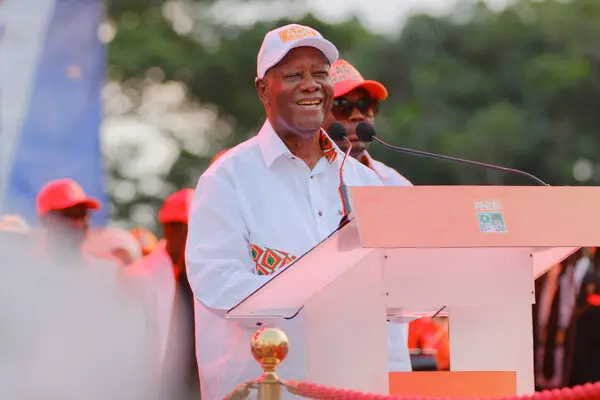
Ivory Coast’s long-serving president, Alassane Ouattara, has won a historic fourth term in office after securing an overwhelming 89.77 percent of the vote in the country’s latest presidential election, according to provisional results announced on Monday. The outcome, though expected, further solidifies Ouattara’s dominance over Ivorian politics and extends his leadership of one of West Africa’s largest economies.
At 83, the veteran leader and former international banker has once again demonstrated his enduring political influence and the deep control his ruling party, the Rally of Houphouëtists for Democracy and Peace (RHDP), holds over the country’s political landscape. His landslide victory marks his third consecutive decisive win since 2011, when he first rose to power after a fiercely contested and violent election that ended a decade-long civil conflict.
This year’s vote, however, was far less competitive. Many of Ouattara’s strongest opponents were barred from contesting due to legal and constitutional issues, leaving the field largely open. Opposition figures and rights groups have criticized the exclusion of key challengers, arguing that it limited voter choice and undermined democratic competition. Nonetheless, the Independent Electoral Commission declared the election free and fair, emphasizing the strong voter turnout in regions loyal to the incumbent president.
Ouattara’s supporters hailed his victory as a vote of confidence in his leadership and vision for continued economic stability. Under his administration, Ivory Coast has become one of Africa’s fastest-growing economies, with major investments in infrastructure, agriculture, and energy. His government has also been credited with restoring the country’s international reputation after years of instability.
However, critics argue that Ouattara’s extended stay in power raises concerns about democratic backsliding and political inclusivity. His decision to run for a fourth term followed a controversial constitutional interpretation that reset presidential term limits, allowing him to seek re-election despite earlier promises to step down. Opposition parties and civil society organizations have voiced fears that this precedent could weaken democratic norms and concentrate power further in the executive branch.
In his victory speech, President Ouattara thanked Ivorians for their trust and pledged to “continue the path of peace, progress, and prosperity.” He emphasized national unity and reconciliation, promising to include all regions and political voices in the country’s development agenda. “Our nation must move forward together,” he said, adding that his new term would focus on job creation, youth empowerment, and consolidating economic gains.
Analysts note that Ouattara’s biggest challenge in his fourth term will be maintaining stability while addressing growing demands for political reform and inclusion. Tensions remain simmering in parts of the country, particularly among opposition supporters who feel marginalized. Observers warn that without meaningful dialogue and institutional reforms, discontent could resurface, threatening the peace Ivory Coast has enjoyed for more than a decade.
International reaction to the election has been measured, with regional leaders congratulating Ouattara on his victory while urging continued efforts toward democratic consolidation and national cohesion. The African Union and ECOWAS have both acknowledged the results but encouraged the government to engage with opposition groups and strengthen electoral transparency ahead of future polls.
As Alassane Ouattara embarks on his fourth term, Ivory Coast stands at a crossroads, balancing its economic success story with the need for deeper democratic renewal. Whether his new mandate will usher in inclusive governance or entrench long-term political dominance remains to be seen.






Leave a comment