


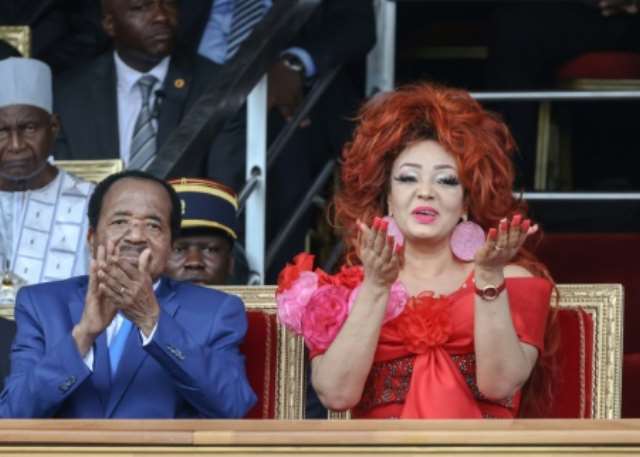
Cameroon’s long-serving president, Paul Biya, made a rare public appearance on Tuesday, marking his first campaign rally ahead of Sunday’s presidential election one that could extend his more than four-decade rule. The 92-year-old leader, who is the world’s oldest head of state, addressed thousands of supporters in the northern town of Maroua, pledging renewed efforts to improve security, create jobs, and revamp infrastructure if given another term in office.
Speaking to a crowd waving party flags and chanting his name, Biya promised to deliver greater opportunities for young people in a nation where unemployment and poverty remain widespread. “My goal, my fellow citizens, is for every young person, wherever they may be, to have opportunities that enable them to easily find a job or become an entrepreneur,” Biya declared, his voice steady but measured.
The rally took place in Cameroon’s Far North Region, a largely Muslim area and one of the country’s poorest. The region has endured years of deadly attacks and kidnappings by the Boko Haram extremist group, which has destabilized communities and driven thousands from their homes. Despite these challenges, the Far North remains politically significant, accounting for nearly 20 percent of Cameroon’s 8.2 million registered voters.
Two of Biya’s main challengers Bello Bouba Maigari and Issa Tchiroma Bakary, both hail from the region and have long been part of the president’s inner political circle before turning rivals. Their participation is expected to divide the northern vote, which could ultimately work in Biya’s favor.
The event in Maroua was Biya’s first campaign outing after weeks of speculation about his health and ability to lead. The president had only recently returned from a private stay in Switzerland, his frequent European destination for medical care and rest. Officials provided no explanation for the trip, consistent with Biya’s long-standing preference for secrecy regarding his personal affairs.
Known for governing from afar and making rare public appearances, Biya has ruled Cameroon since 1982, surviving multiple political crises, coups, and insurgencies. Critics argue that his advanced age and recurring absences from the country have made him increasingly detached from the realities facing Cameroonians, while his supporters insist that his leadership guarantees stability in a volatile region.
Under Biya’s leadership, Cameroon a resource-rich country with oil, minerals, and fertile agricultural land has struggled with corruption, poor governance, and underdevelopment. Despite decades of promises, much of the population still lacks access to basic amenities. The United Nations estimates that 43 percent of Cameroonians live in poverty, with limited access to quality education and healthcare.
The country also continues to battle a violent secessionist conflict in its English-speaking western regions, where armed separatists have clashed with government forces since 2017. The fighting has displaced hundreds of thousands of people, disrupted schooling, and devastated local economies.
Yet, despite growing discontent, Biya’s hold on power remains formidable. The opposition is fragmented, and his most serious challenger, Maurice Kamto, was barred from contesting the election in August. Election watchdogs and international observers have repeatedly questioned the fairness of Cameroon’s polls, citing irregularities and bias within the national election commission, where several officials have close ties to Biya’s government.
In 2008, Cameroon’s parliament, dominated by Biya’s party, voted to abolish presidential term limits, effectively allowing him to rule indefinitely. Since then, every election has seen the president secure sweeping victories amid allegations of fraud and voter intimidation.
As the 92-year-old leader seeks yet another seven-year term, questions about succession, transparency, and governance loom large. Many citizens worry that Biya’s prolonged rule has stifled political renewal and hindered the country’s development. Still, his loyalists view him as a symbol of continuity in a region beset by instability.
With the election just days away, Cameroon stands at a crossroads, torn between the familiarity of long-standing leadership and the uncertainty of change. Whether Biya’s promises of reform will convince voters once again remains to be seen, but his campaign kickoff in Maroua signals one thing clearly: even at 92, the veteran leader is not ready to leave the political stage.






Leave a comment