


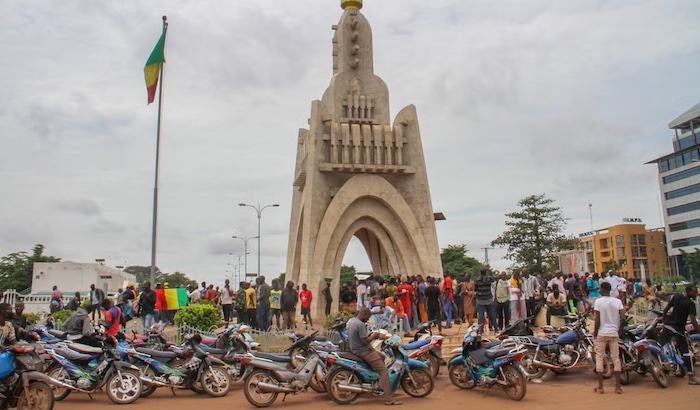
Residents of Bamako, Mali’s bustling capital, are grappling with severe fuel shortages as a militant blockade on fuel tankers stretches into its fourth week, crippling daily life and threatening to paralyze the fragile economy.
The fuel crisis began after Jama’at Nusrat al-Islam wal-Muslimin (JNIM), a militant group affiliated with al-Qaeda, launched a blockade on fuel imports coming from neighboring Senegal and Ivory Coast in early September. Since then, hundreds of tanker trucks have been attacked or destroyed, cutting off crucial supplies to the landlocked West African nation.
By Tuesday, long queues of vehicles and motorbikes snaked across Bamako as desperate residents scrambled to secure scarce fuel. Gas stations were scenes of frustration and chaos, with motorists jostling for position and arguments breaking out as tempers flared.
“It is only a few stations that have it,” said Bakary Coulibaly, a roadside fuel reseller who now struggles to find enough petrol to keep his business afloat. “We spend hours searching. When we do find it, prices are already too high.”
The blockade has created a ripple effect across the city, affecting everything from public transport to food delivery and essential services. Douga Barry, a motorcycle taxi driver, said that despite the hardship, Malians were determined to endure. “We know we are at war, whatever the situation, and we are ready to take it on,” he said. “Even if we have to stop our motorcycles to walk, we are ready for it.”
JNIM, which has waged a brutal insurgency across Mali and parts of the wider Sahel region, declared the fuel blockade as part of its campaign against the country’s military junta, which came to power in 2021 after toppling the previous government. The group’s fighters have since targeted fuel convoys, setting tankers ablaze and blocking key trade routes from the coasts of Senegal and Ivory Coast to Bamako.
According to the Malian Petroleum Importers Association, more than 100 tanker trucks have been destroyed in recent weeks, dealing a devastating blow to an already fragile supply chain. Analysts warn that the disruption could have long-term economic consequences, driving up inflation and worsening poverty in a country where nearly half of the population lives below the national poverty line.
Despite being one of Africa’s top gold producers, Mali remains the sixth least-developed country in the world, heavily reliant on imported goods, including fuel and food. The blockade threatens to push many urban residents deeper into hardship and may erode public confidence in the ruling military government.
In response, the Malian army has stepped up security along key transport corridors, launching escort missions for fuel convoys traveling between Bamako and border towns. In a statement on Monday, the army said it had destroyed several JNIM hideouts linked to an ambush on a tanker convoy near Kolondiéba, close to the Ivorian border.
However, the insurgents’ mobility and reach across vast, sparsely populated areas have made it difficult for authorities to guarantee safe passage for all shipments. The ongoing insecurity underscores the junta’s struggle to restore control over the country, despite repeated promises to improve stability and economic resilience.
Experts say the blockade could become a pivotal test for Mali’s leadership, whose legitimacy has been challenged by worsening violence and growing public discontent. “The fuel crisis is more than an economic issue it’s a security and governance crisis,” said one West Africa analyst. “It shows the limits of state power in regions where armed groups dictate the flow of commerce and daily life.”
As the queues in Bamako grow longer and fuel supplies dwindle, residents are bracing for a tougher road ahead. For many, the crisis has become a grim reminder of how Mali’s ongoing conflict continues to bleed into every aspect of civilian life, leaving millions caught between insecurity, poverty, and political uncertainty.









Leave a comment