


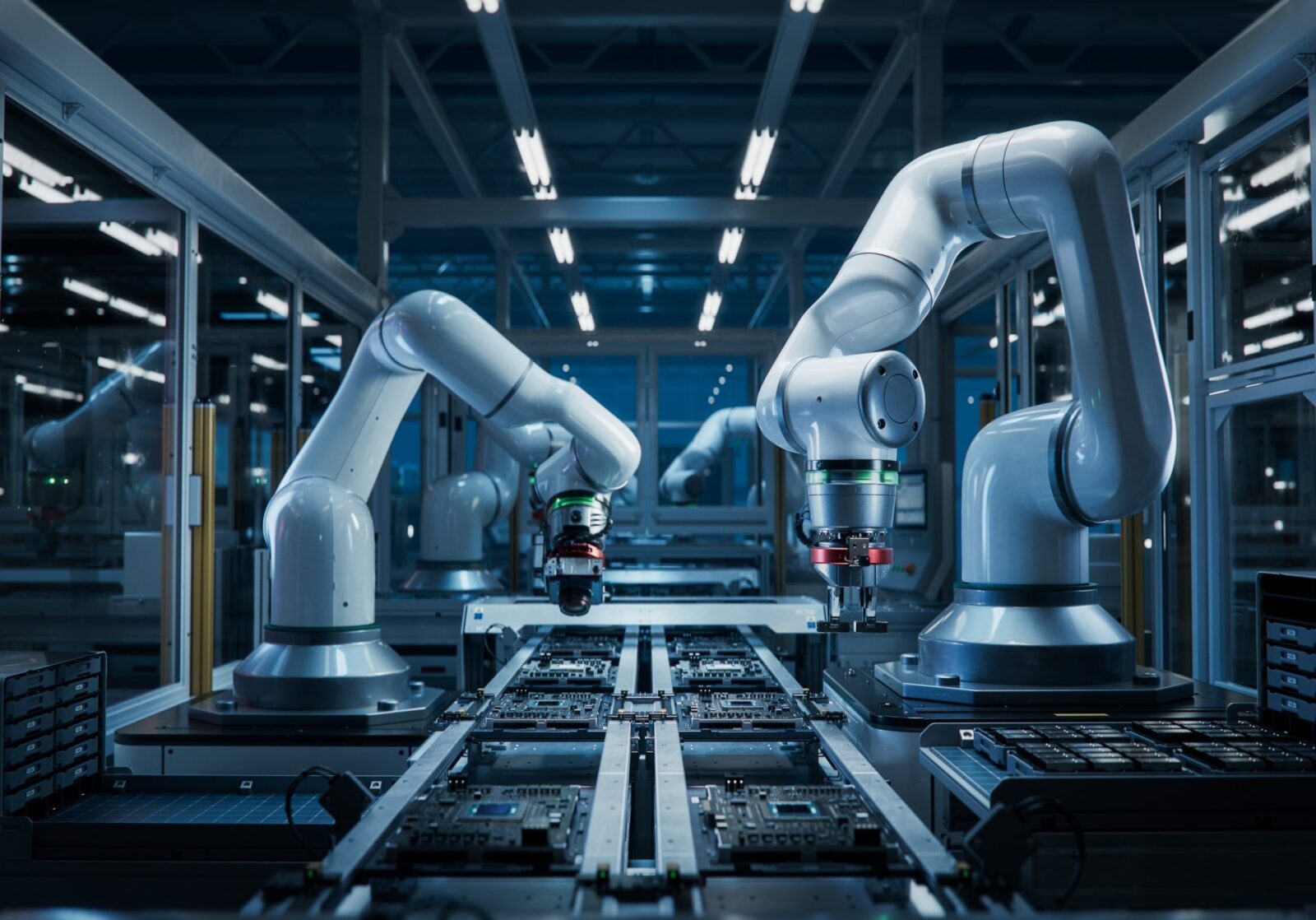
Over the past two decades, manufacturing has become the frontline of automation, robotics, and AI adoption, with global powers like China, South Korea, Russia, and Brazil accelerating their digital transformation strategies while the UK struggles to keep pace. Despite the UK government’s Industrial Strategy aiming to build a digitally literate workforce by 2035, experts warn that such timelines are too slow in the face of rapid international competition. Industry reports reveal that nearly half of British manufacturers identify a lack of technical skills as the single biggest barrier to automation, with many projects stalling post-implementation due to poor guidance and limited SME support. Without urgent investment in workforce training and simplified innovation pathways, the UK could forfeit a potential £150 billion boost to GDP by 2035, undermining its global competitiveness.
Globally, the momentum tells a different story. China has taken a commanding lead in automation by implementing long-term industrial policies that combine heavy subsidies, SME support, and workforce retraining. By 2021, China’s robot density surpassed that of the United States, reaching more than 400 units per 10,000 manufacturing workers, with further growth projected. AI-driven predictive maintenance, real-time production monitoring, and integrated robotics systems have boosted productivity in electronics, automotive, and high-value manufacturing sectors while minimizing downtime and defects. South Korea provides another example of an effective strategy, training 40,000 skilled operators while guaranteeing tax credits for automation investments until 2029, proving that coupling human capital development with policy certainty leads directly to measurable productivity gains.
Russia, meanwhile, is pushing its Industry 4.0 RU initiative, with a focus on digital twins, cyber-physical systems, and AI-enhanced monitoring to modernize its heavy industries. However, progress remains slower than China’s due to underinvestment in R&D and gaps in workforce training. Experts argue that Russia’s future competitiveness will depend on how effectively it can scale AI applications while closing the technical and managerial skills gap. Brazil offers a particularly strong case study from the Global South, with its automation and industrial controls market valued at USD 10.5 billion in 2024 and expected to reach USD 17.8 billion by 2033 at a growth rate of nearly 6% annually. Government-backed programs such as MetaIndústria are giving SMEs access to advanced manufacturing labs, digital innovation hubs, and AI-driven automation systems, supporting higher-quality production, reduced defects, and job creation across industries from automotive to agro-processing.
The lessons for policymakers worldwide are clear: nations that create coherent, long-term strategies integrating digital skills training, SME-focused support, and financial incentives are the ones pulling ahead. Equitable access is critical; fragmented innovation systems like those in the UK risk leaving SMEs behind, while coordinated hubs, as in Brazil and Switzerland, enable smaller firms to scale and adopt advanced technologies effectively. Early investment in AI-driven production data, robotics, and predictive systems provides a decisive edge in both productivity and quality, as China’s trajectory demonstrates.
Looking to the future, countries that successfully marry automation and AI adoption with accessible training, robust SME incentives, and forward-looking industrial policy will dominate global manufacturing competitiveness. For the UK, bridging its growing skills gap, accelerating training programs, and simplifying support for SMEs is an urgent priority. For Russia and Brazil, scaling adoption while strengthening technical education will determine long-term success. Meanwhile, China’s continued dominance underscores how sustained state-backed investment in automation and workforce planning can transform entire industrial sectors.
Automation and AI in manufacturing are no longer optional; they are the foundation of economic resilience, efficiency, and global competitiveness. The gap between nations is already measurable, and the leaders of tomorrow will be those who convert policy, training, and technology into a seamless ecosystem driving both industrial productivity and high-value employment opportunities.









Leave a comment