

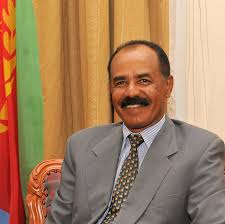
Once celebrated as a symbol of liberation and reform, Eritrean President Isaias Afwerki has now entrenched himself as one of Africa’s longest-serving and most authoritarian leaders. Marking 32 years in power, Afwerki who led the fight for Eritrea’s independence from Ethiopia in 1991 now governs the nation with unchecked control, with no functioning cabinet or national assembly and no signs of democratic reform.
Once hailed as a reformist leader, Afwerki inspired hope across Africa when, in the early 1990s, he publicly criticized aging African autocrats and promised a new democratic future for Eritrea. Following the 1993 referendum in which Eritreans overwhelmingly voted for independence, his government began drafting a new constitution and planning national elections. The 1997 constitution was ratified but never implemented. A year later, a devastating border war with Ethiopia gave Afwerki the pretext to indefinitely postpone democratic reforms.
What followed was a swift descent into repression. In 2001, amid growing internal calls for reform, Afwerki’s government arrested 11 high-ranking officials known as the G-15 and shut down all independent newspapers. These former allies had demanded the implementation of the constitution and the holding of national elections. They were never seen again, joining the ranks of Eritrea’s disappeared.
Over time, Eritrea’s political infrastructure eroded. The transitional assembly was quietly dissolved in 2002, and by 2018, the national cabinet stopped convening. Ministries remain either vacant or are led by aging officials with no real power. Power flows directly from Afwerki, who now lives in near-isolation at a rural residence 20 kilometers outside Asmara, receiving local officials and foreign dignitaries like a monarch.
Isaias Afwerki has made it clear he has no intention of transitioning to a multiparty democracy. In a 2001 interview, he dismissed political pluralism as a “mess” and rejected the idea of ever forming or joining a political party. Instead, the ruling People’s Front for Democracy and Justice (PFDJ) remains the country’s sole legal political entity, functioning more like a state apparatus than a party.
Despite years of international condemnation and isolation, Afwerki has repositioned Eritrea geopolitically. The country has pivoted toward Russia and China, shunning Western alliances and turning down humanitarian aid to maintain a policy of self-reliance. In 2023, he met Russian President Vladimir Putin at the Russia-Africa summit in St. Petersburg, signaling a new strategic alignment.
But Eritreans are paying the price. The economy is stagnant, marked by strict government control, weak infrastructure, and limited foreign investment. The World Bank notes that the economic climate is hampered by import restrictions and a near-absent financial sector. Afwerki admitted in a December 2024 state TV interview that Eritrea’s subsistence economy was unsustainable and underperforming compared to other African nations.
Internally, the government justifies indefinite national service by citing security threats, but the practice has fueled discontent and driven hundreds of thousands to flee. Eritrea’s youth face forced conscription, state repression, and a lack of basic freedoms, with many risking their lives crossing deserts and seas in search of freedom. Eritreans are now the third most common group to receive refugee status in the UK.
No credible opposition exists inside the country, and even within government circles, there’s no clear succession plan. An alleged attempt to position Afwerki’s son as a successor in 2018 was reportedly shut down by the cabinet, its last known meeting. A failed coup attempt in 2013 further underscored the regime’s volatility.
As Afwerki approaches 80, there is deep anxiety about the nation’s future. Critics argue that the absence of institutions and political alternatives means the entire system is dangerously dependent on one man. Despite his Easter appearance in Asmara kissing a cross fueling speculation about potential reforms or prisoner releases there is no indication of impending change.
While some in the military, ruling elite, and diaspora still view him as a national symbol of resistance and pride, a growing number of Eritreans are disillusioned. Without elections, a free press, or civil liberties, Eritrea remains one of the most repressive states in the world, according to global human rights organizations.
For now, President Isaias Afwerki remains firmly in power, and the dreams of a democratic, prosperous Eritrea continue to fade into distant memory, as the nation waits still for its next chapter.






Leave a comment