


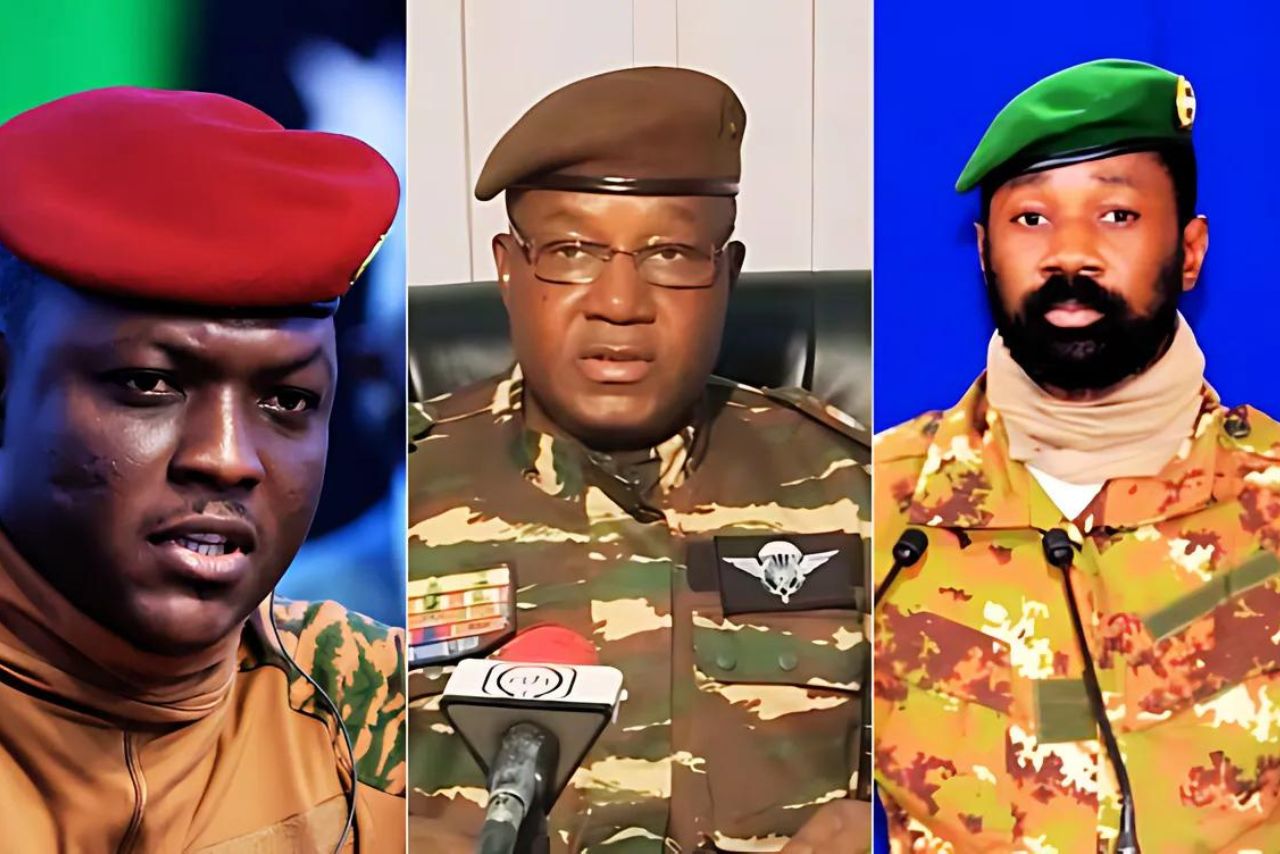
The Economic Community of West African States (ECOWAS) has extended a six-month grace period to Burkina Faso, Mali, and Niger following their formal decision to exit the regional bloc. This announcement, made during a high-level summit in Abuja, Nigeria, underscores a final attempt by ECOWAS to reconcile with the three nations as political tensions and economic uncertainties loom large over the region.
The three countries, all under military-led governments, officially reaffirmed that their withdrawal from ECOWAS remains “irreversible” despite efforts to dissuade them. Their collective exit, scheduled to take effect on January 29, marks a significant fracture within one of Africa’s most prominent regional blocs.
Burkina Faso, Mali, and Niger announced their intention to leave ECOWAS in January 2023, citing growing frustrations with the bloc’s handling of political and security crises within their territories. The military juntas governing the three nations argue that ECOWAS has failed to support them adequately as they grapple with violent insurgencies, economic challenges, and internal political transitions.
The decision to withdraw also follows ECOWAS’ imposition of sanctions and diplomatic isolation in response to military takeovers in all three countries over the past three years. The sanctions, aimed at pressuring the juntas to restore constitutional order, have exacerbated economic hardships and further strained relations between the bloc and its member states.
Mali’s government has been particularly vocal in its criticism, accusing ECOWAS of aligning with external interests rather than addressing the region’s immediate security needs. Burkina Faso and Niger have echoed similar sentiments, positioning their exit as a step toward reclaiming sovereignty and fostering alternative alliances.
At the recent summit in Abuja, ECOWAS leaders opted for a six-month grace period to allow for continued dialogue and minimize the impact of the withdrawal. This period will provide space for the bloc to explore diplomatic solutions, prevent further regional fragmentation, and possibly address the grievances of the departing nations.
The decision to grant the grace period was widely interpreted as a “last-ditch effort” to convince the juntas to reconsider their stance. However, Burkina Faso, Mali, and Niger remain steadfast. In a joint statement, the three nations emphasized that their departure is non-negotiable, describing it as a strategic realignment of their regional partnerships.
“Our decision is irreversible,” the statement read, signaling a firm commitment to their planned exit.
The withdrawal of Burkina Faso, Mali, and Niger from ECOWAS will have far-reaching consequences for the region’s political, economic, and security landscape. ECOWAS has long been a cornerstone of West African integration, fostering economic cooperation, trade facilitation, and collective security initiatives.
For the three exiting nations, the departure could disrupt trade flows and access to ECOWAS’ economic and financial mechanisms, potentially deepening their economic struggles. Mali, for example, relies heavily on regional trade routes to access key markets, while Burkina Faso and Niger face critical challenges in managing cross-border trade amid insurgencies.
Security cooperation could also be severely impacted. ECOWAS has been instrumental in deploying regional peacekeeping forces and coordinating responses to extremist violence in the Sahel. With Burkina Faso, Mali, and Niger forming the epicenter of the region’s security crisis, their exit could hinder collective efforts to combat terrorism and insurgency.
Analysts have noted that the decision may also embolden the three nations to seek alternative alliances outside of ECOWAS. Burkina Faso, Mali, and Niger have recently deepened ties with other regional powers, including Russia, signaling a shift away from traditional partnerships with Western and ECOWAS-aligned entities.
The bloc now faces a critical juncture. The exit of Burkina Faso, Mali, and Niger represents not only a political crisis but also a test of ECOWAS’ ability to adapt to the evolving realities of governance and security in West Africa. The decision to extend a grace period reflects ECOWAS’ acknowledgment of the need for dialogue, but it also raises questions about the bloc’s capacity to address underlying grievances.
Observers have urged ECOWAS to adopt a more pragmatic approach to engaging with military-led governments in the region, emphasizing dialogue over sanctions. “The current strategy of isolation has proven ineffective,” said one regional analyst. “ECOWAS must now prioritize solutions that address both political transitions and security challenges if it hopes to prevent further fragmentation.”




Leave a comment