


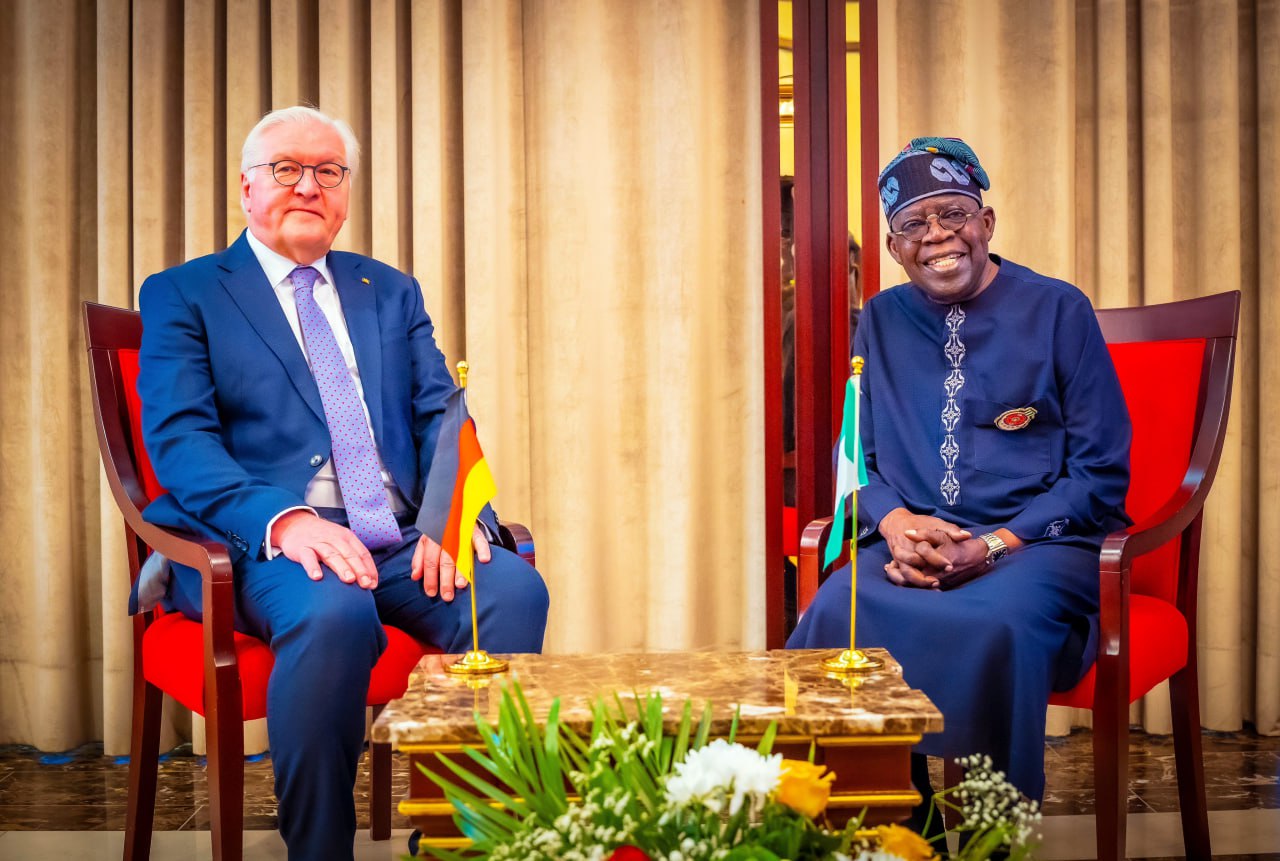
President Bola Ahmed Tinubu has reaffirmed the commitment of the Economic Community of West African States (ECOWAS) to reintegrate Mali, Burkina Faso, and Niger through diplomatic means, despite the recent challenges posed by their withdrawal. Speaking during the visit of German President Frank-Walter Steinmeier to Abuja, Tinubu stressed the importance of balancing firmness on unconstitutional governance with compassion for the citizens of the affected nations.
As ECOWAS Chairman, Tinubu underscored the bloc’s obligation to its core principles of democracy, peace, and regional integration. He emphasized that while ECOWAS remains resolute against military takeovers, its approach will prioritize the well-being of innocent citizens caught in the political turmoil.
“We will continue to lead by example. We have innocent citizens who are victims of the military. We will continue to explore diplomatic channels to navigate without punishing these innocent people,” Tinubu said, as quoted by local media.
The political and security crisis in Mali, Burkina Faso, and Niger has tested ECOWAS’ leadership and unity. The three countries, often referred to as the Alliance of Sahel States (AES), announced their withdrawal from ECOWAS in January 2024, accusing the bloc of failing to address terrorism and imposing punitive sanctions deemed “illegal, illegitimate, inhumane, and irresponsible.” These nations, all led by military governments, have criticized ECOWAS for what they perceive as external interference.
Tinubu, however, made it clear that ECOWAS would not relent in its efforts to bring these nations back into the fold through dialogue. He expressed disappointment over the AES leadership’s reluctance to outline clear and credible transition plans to return to democratic governance, a requirement ECOWAS has consistently upheld.
“We will leave the door for collaboration. This is what ECOWAS will stand for,” Tinubu affirmed, reiterating the bloc’s openness to engage constructively with the AES countries to find common ground.
ECOWAS, under Tinubu’s leadership, is increasingly focused on mitigating the collateral effects of political instability on citizens. The bloc’s sanctions on Mali, Burkina Faso, and Niger—initially imposed to pressure their military governments—drew significant backlash for exacerbating economic hardships in already vulnerable regions. Critics argue that such measures disproportionately harm ordinary people, many of whom face rising insecurity, unemployment, and poverty.
Tinubu acknowledged these concerns, signaling a shift toward a more people-centric approach that prioritizes humanitarian considerations while maintaining ECOWAS’ commitment to constitutional order.
At the heart of Tinubu’s address was a call to preserve ECOWAS’ foundational ideals of regional integration, free movement, and economic cooperation. The withdrawal of Burkina Faso, Mali, and Niger has raised concerns about the fragmentation of West Africa’s economic and security architecture at a time when collective action is critical to combating terrorism and economic stagnation.
Tinubu emphasized that ECOWAS remains committed to fostering trade and collaboration across borders, even with the current tensions. The bloc’s vision, he argued, must transcend political differences and focus on building a resilient, united West Africa.
“Our responsibility is to ensure the free movement of people, goods, and ideas within West Africa. Despite challenges, we must uphold this vision,” Tinubu said.
The road to reintegration, however, remains complex. The AES countries’ withdrawal followed years of mounting frustration over ECOWAS’ perceived inability to stem the tide of terrorism and insecurity that has plagued the Sahel. Mali, Burkina Faso, and Niger have also deepened ties with external partners, such as Russia, signaling a shift in regional alliances.
ECOWAS, under Tinubu’s leadership, faces the challenge of bridging this widening gap while maintaining its legitimacy as a champion of democracy and regional stability. Observers note that successful reintegration will require innovative solutions that address both political and security concerns, while restoring trust between ECOWAS and the AES governments.







Leave a comment