


The Central Bank of Nigeria (CBN) has announced stringent penalties for commercial banks failing to provide adequate cash to customers at automated teller machines (ATMs) and banking halls, as Nigerians grapple with a prolonged cash shortage.
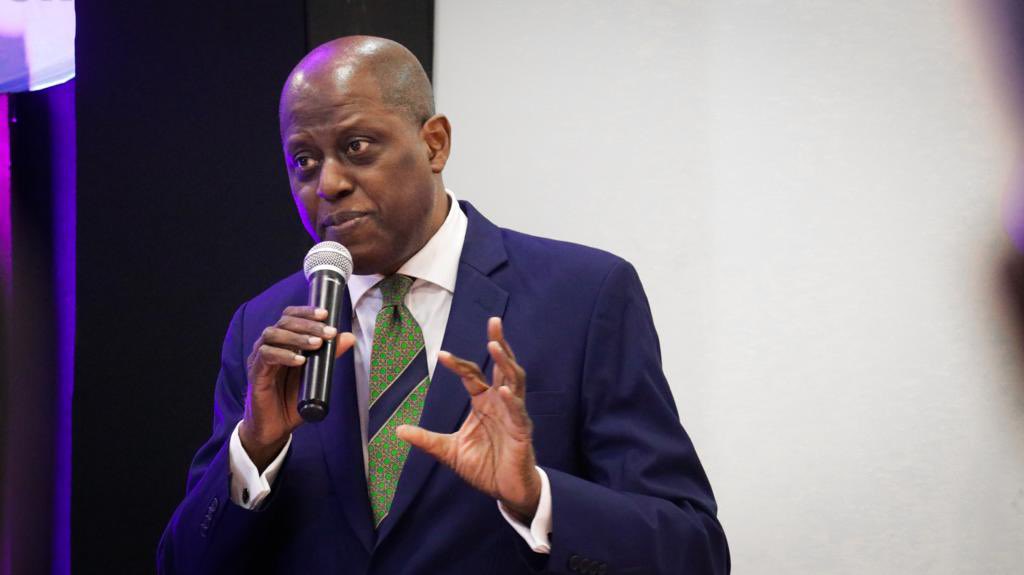
CBN Governor Olayemi Cardoso, speaking at the annual Bankers’ Dinner in Lagos, declared that penalties would be enforced starting December 1, 2024, as part of efforts to restore confidence in the financial system and address the cash scarcity disrupting daily life and business operations.
“We are conducting spot checks across deposit money banks (DMBs) to ensure compliance,” Governor Cardoso said. He also encouraged customers to report instances of cash unavailability directly to the CBN through designated channels. The apex bank plans to distribute detailed guidelines widely to raise public awareness of this initiative.
The governor emphasized the need for all financial stakeholders, including mobile money operators and agency banking agents, to comply fully with regulatory standards to ensure efficient cash distribution and digital payment services. “Financial institutions found engaging in malpractices or deliberate sabotage will face stringent penalties,” he warned.
Nigeria’s cash crunch can be traced back to the controversial naira redesign policy introduced in 2023, which aimed to promote a cashless economy but inadvertently created widespread hardship. The poorly executed project caused a severe shortage of physical cash in banking halls and ATMs, forcing Nigerians to turn to digital payment platforms such as Opay and Palmpay, which saw significant growth during the crisis.
The cash shortage was exacerbated by the CBN’s policy capping weekly over-the-counter withdrawals at ₦500,000. This restriction, coupled with the lack of cash availability at commercial banks, drove many Nigerians to rely on point-of-sale (POS) agents for cash. These agents sourced cash from unconventional outlets such as supermarkets, market traders, and fuel stations, often at steep service charges.
The growing reliance on POS agents has prompted calls for tighter regulation of the agency banking sector. In May 2024, the government mandated Nigeria’s 1.9 million POS operators to register with the Corporate Affairs Commission (CAC) as part of broader efforts to formalize the sector.
Despite these regulatory measures, many Nigerians remain reliant on cash for daily transactions, highlighting the challenges in transitioning to a cashless economy.
While the CBN has worked to promote digital transactions as a solution to cash dependence, Governor Cardoso reassured Nigerians that the regulator remains committed to ensuring adequate cash availability during high-demand periods, such as the upcoming festive season.
“The CBN will maintain a robust cash buffer to meet the country’s needs, particularly during periods of heightened demand,” Cardoso said. “Our focus is on ensuring a seamless cash flow for Nigerians while fostering trust and stability in the financial system.”









Leave a comment