


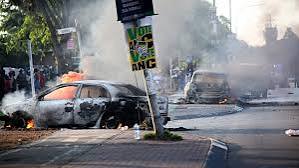
Anti immigration protests turned violent in South Africa on Thursday, Oct. 8, with at least 24 vehicles set ablaze and shops owned by foreign nationals looted in Johannesburg’s Soweto township and the coastal city of Durban.
The violence followed demonstrations against the processing of asylum applications after a Constitutional Court ruling removed procedural barriers that had prevented some migrants from accessing South Africa’s asylum system. Police reinforced their presence in affected areas as clashes, arson and looting disrupted businesses and threatened public safety.
Acting National Police Commissioner Lt. Gen. Puleng Dimpane said 10 vehicles were burned in Soweto and 14 in Durban, in KwaZulu Natal province. Three people were arrested in Durban in connection with an alleged assault on a protester.
Dimpane condemned the destruction, stressing that the right to protest did not give demonstrators permission to commit crimes. Authorities said public order police had been deployed to areas affected by the unrest.
In Soweto, violence broke out near a Department of Home Affairs office in Orlando West. Metro police spokesperson Xolani Fihla said officers received reports of gunfire directed at protesters, followed by retaliatory vehicle burnings. Authorities had not established who allegedly fired the shots.
Community leader Tshepo Mposula said the demonstration began peacefully before some residents moved against foreign owned convenience stores. He alleged that shots fired by foreign nationals angered protesters and contributed to the escalation. These claims had not been independently established by authorities.
In Durban, shops owned by foreign nationals were looted and vehicles set alight in the city centre. Riot police were deployed as firefighters responded to blazes. Police spokesperson Col. Robert Netshiunda said three foreign nationals had been arrested on suspicion of assaulting a demonstrator, an incident investigators believed may have contributed to the violence.
The protests followed a July 2026 Constitutional Court ruling that removed certain procedural obstacles preventing people from applying for asylum. These included restrictions affecting people who entered the country irregularly, lacked asylum transit visas or missed reporting deadlines.
The ruling did not automatically grant refugee status, permanent residence or other legal rights to undocumented migrants. Instead, it allowed eligible applicants to have their asylum claims considered through the country’s established process.
South Africa’s government said misinformation about the judgment had fuelled the unrest. Officials also acknowledged that refugee reception offices had been overwhelmed by the number of people seeking to submit applications after the government directed them to accept the claims.
The Department of Home Affairs announced on Friday, Oct. 9, that it had withdrawn a directive introduced to facilitate the intake of applications. The department said implementation had overwhelmed refugee reception offices, put officials at risk and created concerns about public order. The withdrawal came a day after the violent protests.
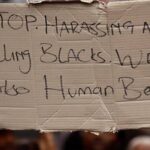
The unrest comes amid months of anti immigrant demonstrations in South Africa, where some groups have demanded the removal of undocumented foreign nationals. Migrants have frequently been blamed for unemployment, crime and pressure on public services, although researchers say claims linking migrants broadly to these problems are not supported by sufficient evidence.
South Africa continues to face high unemployment and deep economic inequality, despite being the continent’s largest economy. The country also remains a major destination for migrants from other African nations seeking employment, business opportunities and safety.
Previous anti migrant demonstrations have raised concerns about the safety of foreign nationals and strained South Africa’s relations with neighbouring countries. Reports of violence and looting have also prompted some migrants to leave the country.
The latest incidents highlight the challenge facing authorities as they seek to enforce immigration laws, manage asylum applications and respond to public concerns without allowing demonstrations to become attacks on people and businesses.
The government’s response, including the restoration of order and management of asylum applications, will be closely watched by migrant communities, neighbouring states and organisations advocating for the rights and protection of refugees.








Leave a comment