


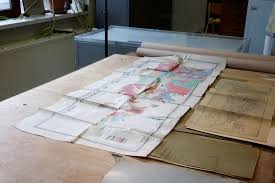
A standoff has developed between a U.S. mining firm backed by billionaires Jeff Bezos and Bill Gates and Belgium’s AfricaMuseum over who should digitise and manage a vast collection of colonial‑era geological documents detailing the mineral wealth of the Democratic Republic of Congo (DRC).
The archives in question are held at the AfricaMuseum in Tervuren, just outside Brussels, and contain millions of fragile, often handwritten documents and maps that record how Congo’s subsoil resources were surveyed and exploited during Belgian colonial rule. The shelves holding these records stretch for roughly 500 metres and have become central to a dispute that combines issues of historical legacy, data access, and the geopolitics of critical minerals.
U.S.‑based KoBold Metals, a mining start‑up that counts Bezos and Gates among its investors, has proposed to fund and assist in digitising the archive on behalf of the DRC government. The company, which secured permits last year to explore for lithium and other minerals in the DRC, argues that making the data widely available in digital form would support investment, exploration and the country’s economic development. Benjamin Katabuka, Director General for KoBold in the DRC, told Reuters that KoBold would “scan and digitise the documents and make them accessible to the public immediately,” asserting that such access is essential for attracting further exploration investment.
KoBold’s interest in the archive is driven in part by its use of advanced technologies, including artificial intelligence, to identify new mineral deposits. The geological records could significantly enhance these analyses, especially for critical minerals such as lithium, cobalt, copper and coltan, which are abundant in the DRC and vital for electric vehicles, battery storage, electronics and defence supply chains.
Belgian officials and the AfricaMuseum have rejected KoBold’s offer, saying that a private company should not be given control over a public archive. Museum director Bart Ouvry emphasised that there is already an ongoing digitisation project organised with the DRC’s National Geological Service and backed by the European Union. According to Ouvry, this project will gradually make the archive accessible to both countries in compliance with Belgian and European law, but it will be managed under public institutional oversight rather than by a private entity.
A Belgian government spokesperson added that the geological archives are a public asset, and that Belgium “cannot, under any circumstances, grant exclusive access to a foreign company or private entity with which it does not have a contractual relationship.”
The dispute highlights legal nuances: despite a 2022 Belgian law that provides a framework for returning colonial‑era collections to countries in Africa, that law specifically excludes archival materials. As a result, while cultural objects might be returned under certain conditions, the archives remain subject to Belgian legal and institutional control.
The archive’s colonial origins underscore the fraught history between Belgium and the DRC. Belgium’s control over the Congo began under King Leopold II in 1885, when he seized the territory for personal enrichment and subjected its population to brutal exploitation before it became a Belgian colony in 1908. The geological surveys and maps held in Tervuren date from that era and reflect decades of colonial resource extraction.
Today the DRC remains central to global supply chains for critical minerals. Its ministry of mines estimates that the country has only begun to tap a fraction of its mineral potential. The competition among global powers and corporations to secure supplies of these minerals has added urgency to the debate around access to historical geological data.










Leave a comment