


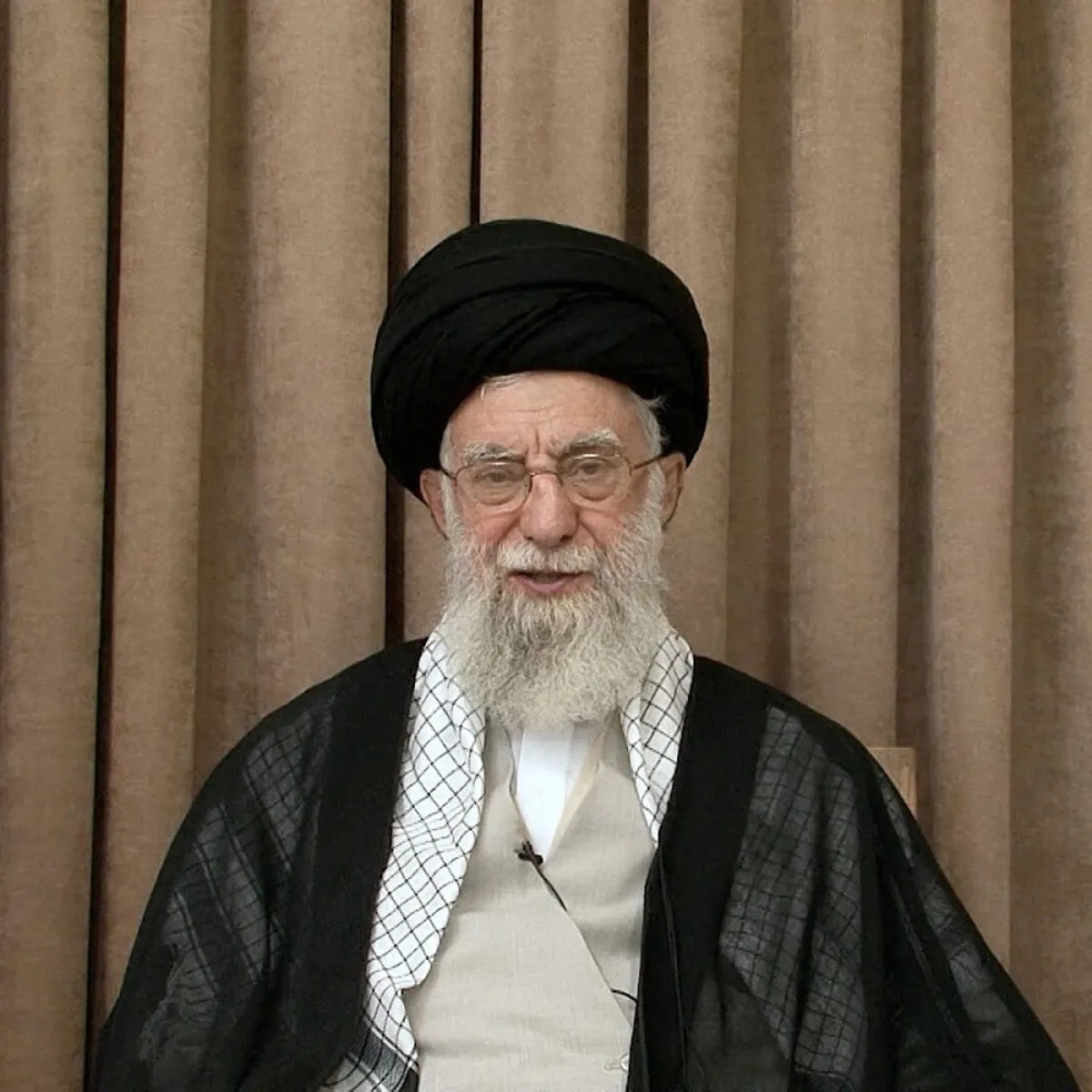
Iran’s Supreme Leader, Ali Khamenei, has been the central figure in shaping the Islamic Republic’s political, religious, and foreign policy landscape since assuming power in 1989. His leadership has been marked by a steadfast opposition to the United States, whom he views as the foremost threat to Iran’s sovereignty, Islamic values, and regional influence. Over more than three decades, Khamenei has cultivated an image of unyielding resistance, both domestically and on the international stage, positioning himself as the guardian of the Islamic Revolution and a symbol of national independence.
Khamenei’s animosity toward Washington is rooted in historical grievances, including the 1953 U.S.-backed coup that overthrew Iran’s democratically elected Prime Minister Mohammad Mossadegh, the support for Saddam Hussein during the Iran-Iraq war, and decades of sanctions imposed on Iran over its nuclear program. He consistently frames U.S. policies as coercive, exploitative, and imperialistic, portraying the United States as an external actor intent on undermining Iran’s stability and regional standing. This rhetoric resonates with many Iranians, particularly conservative constituencies, and has been instrumental in consolidating domestic support for the regime’s ideological and political agenda.
Khamenei wields significant influence over Iran’s strategic institutions, including the Islamic Revolutionary Guard Corps (IRGC), the judiciary, and key security organizations. The IRGC, under his direction, has become a central instrument of Iran’s regional power projection, supporting proxy forces and allied militias in countries such as Iraq, Syria, Lebanon, and Yemen. These interventions have frequently brought Iran into direct conflict with U.S. interests and its regional allies, including Israel, Saudi Arabia, and other Gulf states, reinforcing Khamenei’s image as a resolute opponent of American influence.
While international diplomacy, including the 2015 Joint Comprehensive Plan of Action (JCPOA), sought to curb Iran’s nuclear ambitions through engagement with the United States and other world powers, Khamenei maintained strict conditions. He insisted that no agreement should compromise Iran’s strategic independence or military capabilities, emphasizing that negotiations must respect Iran’s national sovereignty and security interests. He has frequently used nuclear policy and regional influence as leverage in dealings with the United States, signaling that Iran will resist external pressures even in the face of economic sanctions.
Khamenei’s domestic policies are closely tied to his foreign policy stance. By portraying the United States as a persistent threat, he has reinforced the regime’s narrative of resistance, centralizing power and justifying restrictive measures against dissent and civil liberties. This linkage between external opposition and internal consolidation has helped maintain the ideological cohesion of the Islamic Republic, even amid economic hardship and social unrest.
The Supreme Leader’s worldview is also shaped by his vision of regional leadership. He seeks to expand Iran’s influence through alliances with Shiite militias and sympathetic governments, challenging U.S.-aligned states and creating a network of influence across the Middle East. This strategy reflects his belief that confronting American power is essential not only for Iran’s security but also for advancing a broader vision of an autonomous, regionally influential Islamic state.
In the decades of Khamenei’s rule, the relationship between Tehran and Washington has remained one of the most complex and contentious in modern geopolitics. His uncompromising stance ensures that engagement with the United States is always fraught with tension, while domestic legitimacy continues to be intertwined with his portrayal of America as an adversary. As global and regional dynamics evolve, Khamenei’s enduring opposition to the United States will remain a defining feature of Iran’s foreign policy and a central factor shaping security, diplomacy, and geopolitical calculations across the Middle East.









Leave a comment