


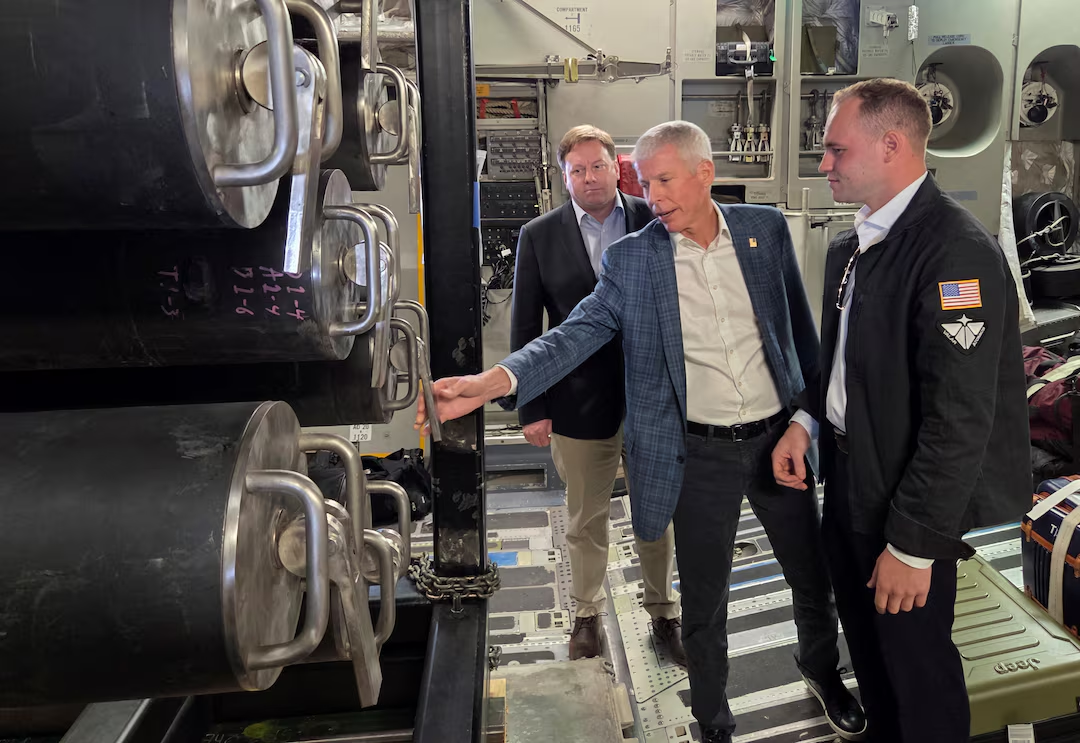
The U.S. Departments of Energy and Defense completed the first ever air transport of a nuclear microreactor on Sunday as part of efforts to demonstrate how small nuclear power units could be rapidly deployed for both military and civilian use.
Officials partnered with California‑based Valar Atomics to fly one of the company’s Ward microreactors a unit roughly the size of a minivan on a C‑17 cargo aircraft from March Air Force Base in California to Hill Air Force Base in Utah. The reactor was transported without nuclear fuel.
Energy Secretary Chris Wright and Under Secretary of Defense for Acquisition and Sustainment Michael Duffey were aboard the aircraft with the reactor and its components. They hailed the operation as a milestone for U.S. nuclear energy innovation and military logistics. “This gets us closer to deploy nuclear power when and where it is needed to give our nation’s warfighters the tools to win in battle,” Duffey said.
The Ward microreactor can generate up to 5 megawatts of electricity, enough to power about 5,000 homes, according to Valar Atomics CEO Isaiah Taylor. The unit is expected to begin operating at low output this July and ramp up toward full capacity later in the year. Valar plans to sell electricity on a test basis in 2027 and aims for full commercial deployment by 2028.
President Donald Trump’s administration has promoted small nuclear reactors as part of a broader strategy to expand domestic energy production and bolster national security. Last May the White House issued four executive orders supporting increased nuclear deployment to meet energy needs tied to defense and competitive technological demands such as artificial intelligence. The Energy Department has also issued grants to accelerate development of small modular reactors.
Proponents of microreactors say they could offer a flexible alternative to traditional power sources, particularly in remote or hard‑to‑reach locations where diesel generators are currently used and require frequent fuel deliveries. However, critics argue the industry has not yet demonstrated that small nuclear reactors can produce power at a competitive cost compared with larger reactors or renewable sources such as wind and solar. “There is no business case for microreactors,” said Edwin Lyman, director of nuclear power safety at the Union of Concerned Scientists.
The Energy Department plans to have three microreactors reach “criticality” the point at which a nuclear reaction can sustain itself by July 4 this year.
While the transported reactor still awaits fuel, discussions continue over broader issues such as fuel fabrication, uranium enrichment and nuclear waste disposal. Officials said fuel will be moved from the Nevada National Security Site to a facility in San Rafael, and the department is in talks with states including Utah about potential sites to reprocess or permanently dispose of waste.












Leave a comment