


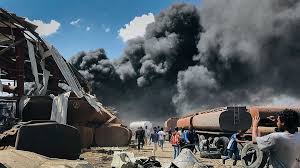
One person was killed and another injured in drone strikes in Ethiopia’s northern Tigray region on Saturday, according to a senior Tigrayan official and a humanitarian worker, raising fresh fears of a resurgence of violence between regional forces and the federal government. The strikes reportedly targeted areas near civilian settlements, highlighting the ongoing risk to non-combatants in a region that has not fully recovered from years of conflict. Local authorities said investigations were ongoing to determine the full extent of the damage, and humanitarian workers warned that casualties may be higher than initially reported due to restricted access in some affected areas.
The attacks come more than two years after Ethiopia’s national army and allied forces reached a peace agreement with the Tigray People’s Liberation Front (TPLF) in late 2022, bringing an official end to one of Africa’s deadliest recent wars. That conflict, which lasted from late 2020 to 2022, devastated the region, claiming hundreds of thousands of lives through a combination of direct violence, the collapse of healthcare services, food insecurity, and famine. Millions were displaced, and infrastructure, including hospitals, schools, and roads, was left in ruins.
Although the peace deal brought an official cessation of large-scale hostilities, underlying tensions have remained high. Sporadic clashes, political disputes, and mutual accusations of ceasefire violations have continued, creating a climate of insecurity. Aid agencies have repeatedly warned that the humanitarian situation in Tigray remains precarious, with millions still reliant on food assistance, healthcare, and other basic services. Many displaced families have been slow to return home due to lingering fears of renewed violence.
Humanitarian workers and analysts expressed concern that the recent use of drones in the attacks could mark a dangerous escalation. Unlike traditional ground confrontations, drone strikes can strike deep into previously secure areas, making civilians particularly vulnerable. Such attacks also risk undermining fragile trust between local populations and federal authorities, which is essential for post-conflict reconstruction, reconciliation, and the resumption of normal economic and social activity.
Neither Ethiopia’s federal government nor its military has publicly issued a detailed statement on the drone strikes. Observers say the lack of transparency may exacerbate tensions, with local populations feeling increasingly insecure. Experts warn that unless political grievances, governance issues, and security arrangements in Tigray are addressed, the region could relapse into broader conflict, threatening peace efforts not only in the north but also across Ethiopia, which has seen unrest in multiple regions.
Human rights organisations emphasised that renewed violence could also impede humanitarian operations, slowing the delivery of food, medical supplies, and reconstruction assistance. They called for international attention and pressure to ensure the protection of civilians and the enforcement of the 2022 peace agreement.
The incident underscores how fragile post-conflict recovery can be when political and military disputes remain unresolved. While Ethiopia as a whole continues to confront economic and social challenges, the situation in Tigray remains a flashpoint, highlighting the urgent need for sustained diplomatic engagement, accountability, and effective mechanisms to prevent a return to large-scale violence.












Leave a comment