


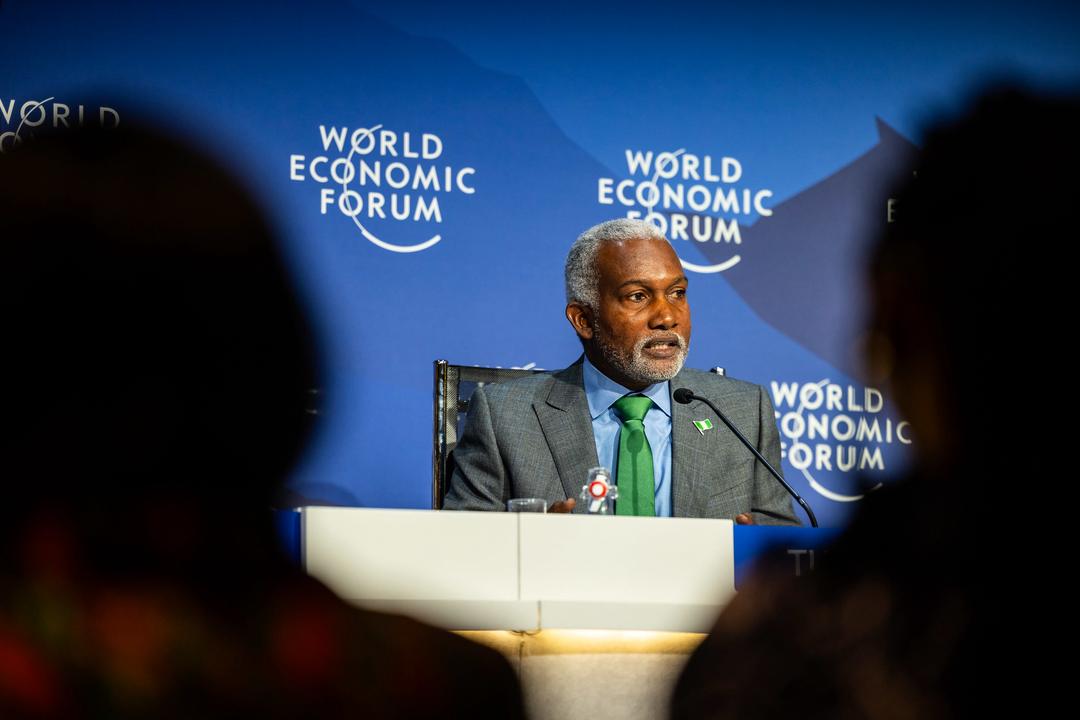
Nigeria is pursuing a bold strategy to create sustainable employment through comprehensive macroeconomic reforms and the strengthening of private-sector participation, according to the country’s Minister of Foreign Affairs, Honourable Yusuf Maitama Tuggar. Speaking at the Africa Jobs Engine Panel on the sidelines of the World Economic Forum, the Minister outlined how the Tinubu Administration is positioning the economy for long-term, inclusive growth.
At the core of Nigeria’s approach is the restoration of macroeconomic stability and the establishment of clear, investable pathways for businesses. Key reforms include stabilising the foreign exchange regime, removing fuel subsidies, and restructuring the power sector by separating generation, transmission, and distribution. These measures are designed to improve transparency, reduce market distortions, and attract long-term private investment, particularly in sectors that are energy intensive and have high employment potential.
The Minister highlighted ongoing tax reforms aimed at improving efficiency, predictability, and competitiveness, making Nigeria a more attractive destination for domestic and international investors. He also pointed to the country’s hosting of the West Africa Economic Summit (WAES) as a critical platform for bridging information gaps, equipping the private sector with practical knowledge of regional frameworks, and enabling participation in initiatives such as the West African Power Pool.
“Government’s role is to provide stable and enabling conditions,” the Minister emphasised, “but it is the private sector that drives job creation.” He noted the emergence of local production ecosystems that convert raw materials into finished goods, strengthened by closer linkages between labour, finance, and markets. These developments are already expanding opportunities for women and young people across the country.
Honourable Tuggar also stressed the importance of the African Continental Free Trade Area remaining focused on its mandate of economic integration. Deepening intra-African trade, building industrial linkages, and strengthening value chains, he said, are essential for sustaining long-term employment and growth across the continent.
Concluding his remarks, the Minister reaffirmed Nigeria’s commitment to reforms that boost investor confidence, unlock private capital, and position the economy as a platform for inclusive growth and job creation in Africa. By combining macroeconomic stability with private-sector-led development, Nigeria aims to transform its labour market and provide meaningful opportunities for its growing population.











Leave a comment