


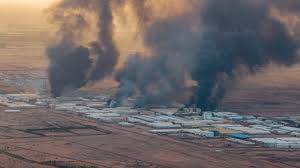
After more than two years of sustained conflict, Sudan is confronting a deepening energy crisis that is rapidly becoming one of the most serious consequences of the war. What began as a political and military struggle has now evolved into a systemic collapse of the country’s oil production and refining capacity, cutting off a critical pillar of the national economy and leaving millions of people struggling to access basic fuel and energy supplies.
Oil has long played a central role in Sudan’s economic structure, providing government revenue, foreign exchange, and the fuel required to power transport, agriculture, and electricity generation. That foundation has been steadily eroded by fighting that has engulfed key oil producing and processing regions, turning vital infrastructure into military targets or collateral damage.
A major blow came in December with the complete shutdown of the Heglig oil field, Sudan’s largest and most important production site. Escalating violence in the area forced a full evacuation of staff, halting operations entirely. The loss of Heglig alone removed a substantial share of Sudan’s remaining crude output, further weakening an industry already operating under extreme pressure.
Beyond production sites, the country’s oil infrastructure has suffered repeated attacks and damage. Pipelines linking oil fields to refineries and export terminals have been disrupted, while refineries and storage facilities have been hit or rendered inaccessible. Oil depots in Port Sudan, a crucial hub for imports and distribution, have also been affected, compounding logistical challenges at a time when the country is increasingly dependent on imported fuel.
Perhaps the most devastating impact has been the closure of Sudan’s largest refinery near Khartoum. Before the conflict, this facility supplied most of the country’s diesel, gasoline, and liquefied petroleum gas, forming the backbone of domestic fuel availability. Its continued shutdown has left Sudan without meaningful refining capacity, forcing the government and private importers to rely almost entirely on foreign fuel supplies.
This dependence on imports has proven unsustainable. The conflict has disrupted regional supply chains, increased transportation risks, and driven up costs. Imported fuel is now significantly more expensive, scarce, and unevenly distributed, with rural areas and conflict affected regions suffering the most acute shortages. Long queues at fuel stations have become common, while black market prices place energy out of reach for many households and small businesses.
The fiscal consequences are equally severe. According to Sudan’s finance ministry, oil revenues have fallen by more than fifty percent compared to pre conflict levels. This collapse has deprived the state of one of its most reliable sources of income at a time when public spending needs are soaring. Reduced revenues have limited the government’s ability to pay salaries, subsidize fuel, or invest in repairs, reinforcing a cycle of decline.
Industry experts warn that without functional refining capacity and basic security for infrastructure, Sudan’s energy crisis will continue to deepen. Fuel shortages are already affecting food production and distribution, as farmers struggle to power irrigation pumps and transport goods to markets. Electricity generation, much of which depends on diesel, has become increasingly erratic, affecting hospitals, water systems, and essential services.
For ordinary Sudanese, the energy crisis is not an abstract economic issue but a daily struggle. Access to cooking gas, transport fuel, and electricity has become unpredictable and costly. Families are forced to make difficult choices, while businesses scale back or shut down entirely. In many areas, humanitarian operations are also constrained by fuel shortages, limiting their ability to reach vulnerable populations.
The collapse of Sudan’s oil sector highlights how prolonged conflict destroys not only lives and communities but also the economic systems that sustain a country. Even if fighting were to subside, rebuilding oil fields, refineries, pipelines, and storage facilities would require time, capital, and a level of stability that currently remains elusive.
As the war drags on, Sudan’s energy crisis stands as a stark reminder that the cost of conflict extends far beyond the battlefield. The continued degradation of the oil sector threatens long term economic recovery and risks locking the country into deeper poverty and dependence, making the path to stability and reconstruction even more difficult once the guns eventually fall silent.








Leave a comment