


Ethiopian Orthodox Christians across the country have been celebrating Timket, also known as Epiphany, one of the most important festivals in the Ethiopian Orthodox Tewahedo Church. The annual celebration commemorates the baptism of Jesus Christ in the River Jordan and is observed with deep spiritual reverence, vibrant ceremony, and centuries old traditions that are unique to Ethiopia’s Christian heritage.
Timket is observed according to the Ethiopian calendar, usually falling in January, and draws thousands of worshippers into churches, town squares, riversides, and lakeshores. The festival is not only a religious commemoration but also a powerful expression of identity, continuity, and faith for millions of Ethiopians. It marks the public revelation of Christ and symbolizes spiritual renewal through baptism, a central sacrament in Orthodox Christian belief.
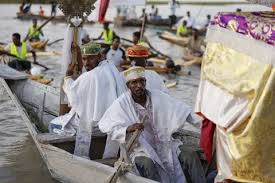
In the town of Batu, situated along the shores of Lake Dambal in Ethiopia’s Oromia region, celebrations unfolded with striking pageantry and solemn devotion. Priests from local churches led processions carrying sacred objects known as tabots, replicas of the Ark of the Covenant. Wrapped in richly embroidered cloths and carried on the heads of priests, the tabots are regarded as the holiest objects in Ethiopian Orthodox worship. According to tradition, they symbolically contain the Biblical Ten Commandments and represent the presence of God among the people.
The procession of the tabots is a defining feature of Timket. Accompanied by chanting, drumming, and the rhythmic sounds of traditional sistrums, priests and deacons move from churches to nearby bodies of water, reenacting the journey to the River Jordan. Worshippers follow, dressed in white garments, creating a sea of flowing cotton robes that reflect purity and humility. The atmosphere blends celebration with solemnity, as faith is expressed both publicly and communally.
Once the tabots reach the water, they are placed in specially prepared ceremonial spaces and kept there overnight. This vigil is marked by prayers, hymns, and readings from scripture, emphasizing repentance, spiritual cleansing, and renewal. At dawn, priests bless the water in a ritual that symbolizes the baptism of Christ. Holy water is then sprinkled over the faithful, and in many places, worshippers immerse themselves fully as an act of spiritual rebirth.
In Batu, the shores of Lake Dambal became a focal point of devotion, drawing believers from surrounding communities. The lake, like many natural water bodies used during Timket, takes on a sacred role during the festival. Its use reflects the Ethiopian Orthodox Church’s deep connection to the natural world, where rivers and lakes are not merely physical landscapes but spiritual spaces that link the earthly and the divine.
Timket also serves as a living reminder of Ethiopia’s ancient Christian history. Christianity has been practiced in Ethiopia since the fourth century, making it one of the oldest Christian nations in the world. Over time, Ethiopian Orthodoxy developed distinctive liturgical practices, theology, music, and art, with Timket standing out as one of its most visually and spiritually powerful celebrations.
Beyond its religious significance, the festival reinforces social bonds. Families gather, communities reconnect, and generational traditions are passed down through shared worship and storytelling. For many Ethiopians, Timket is both a sacred obligation and a moment of joy, affirming belonging in a rapidly changing world.
In recent years, Timket celebrations have also attracted international attention for their cultural richness, though for worshippers the essence of the festival remains firmly spiritual rather than performative. It is a time to reflect on faith, humility, and renewal, values that remain central to Ethiopian Orthodox life.
As priests escort the tabots back to their churches following the blessing of the water, the festival comes to a close, but its meaning endures. Timket continues to stand as a powerful symbol of Ethiopia’s religious continuity, resilience, and devotion, uniting past and present in a celebration that has endured for centuries.











Leave a comment