


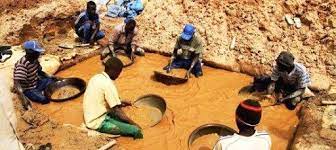
Gold prices have reached record highs in 2025, driven by global economic uncertainty, trade tensions, and armed conflicts, prompting a rush among investors, central banks, and institutions to secure the precious metal as a stable asset. However, beneath the glitter of booming gold markets lies a darker reality in Africa’s Sahel region, where gold has become a lifeline for embattled military juntas and a major driver of violent conflict.
In Burkina Faso, Mali, and Niger three Sahelian nations ruled by military governments grappling with jihadist insurgencies and regional isolation gold production has emerged as a critical economic resource. According to the World Gold Council, the three countries collectively produce approximately 230 tonnes of gold annually, valued at over $15 billion at current global rates. This figure may be an underestimate, given the vast scale of unrecorded artisanal and small-scale mining across the region.
Governments in these countries claim that the proceeds from gold mining are being reinvested into national development and sovereignty. However, the reality suggests that much of the gold revenue is channeled toward military expenditure and counterinsurgency campaigns. Public financial transparency remains low, and research from Chatham House and other analysts indicates that foreign partners especially Russian private military firms like Wagner Group and its successor Africa Corps are receiving payments for military services in the form of gold or mining concessions.
In Mali, military spending surged to 22% of the national budget by 2020 and continues to rise. The country’s leader, Gen Assimi Goïta, recently laid the foundation for a new gold refinery in partnership with Russia’s Yadran Group. In Burkina Faso, the government has mandated a 15% state ownership in foreign-operated mining firms and has launched its first-ever state-backed gold refinery. Meanwhile, AI-generated propaganda glorifies the leadership of Capt Ibrahim Traoré, portraying him as a national hero for securing gold revenue streams, even as his government faces growing accusations of human rights violations.
Despite the profits pouring into government coffers, many local communities and miners remain impoverished. Most gold mining in the Sahel is conducted informally through artisanal and small-scale methods on unregulated and often unsafe sites. A miner in Mali’s Kidal region told the BBC that he earns between $18 and $36 on a good day, with no change in wages despite surging global prices. “Prices went up, but the extra profit goes to mine owners,” he said, highlighting the inequality in gold’s value chain.
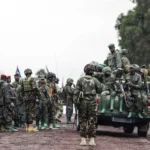
The United Nations Office on Drugs and Crime (UNODC) reports that artisanal mining sites have become flashpoints for conflict, with jihadist groups and state forces competing for control. The al-Qaeda-linked Jamaat Nusrat al-Islam wal-Muslimin (JNIM) has intensified attacks in Burkina Faso, targeting military outposts and seizing territory. Analysts warn that insurgents are using revenue from illicit gold mining to finance their operations, further fueling instability in the region.
The growing role of gold in Sahel conflicts has raised concerns among international observers. While diamonds once dominated conversations around conflict minerals, gold has quietly become Africa’s new blood commodity. Unlike diamonds, which can often be traced through the Kimberley Process Certification Scheme, gold’s origins are nearly impossible to verify once smelted. Experts like Dr Alex Vines of Chatham House point out that gold is smelted early in the value chain, erasing geographic markers and allowing conflict gold to enter global markets undetected.
Most of the gold from artisanal mines in Mali, Burkina Faso, and Niger is exported to the United Arab Emirates, a global refining hub. Though the UAE introduced voluntary ethical sourcing standards in 2021, enforcement remains weak. The London Bullion Market Association (LBMA) has expressed concern over the lack of consistent regulation and traceability in the gold supply chain. According to Dr Vines, some of this conflict-linked gold inevitably reaches the UK and other Western markets through refined products such as jewelry, bullion, and dental gold.
Efforts to replicate the Kimberley Process for gold face numerous challenges, especially because current certification systems were designed to target non-state actors, not state-backed conflict economies. With Russian involvement deepening in the Sahel’s mining sector and with gold playing a central role in financing both state and non-state violence, the stakes are high.
As the world continues to flock to gold amid economic turmoil, the true cost of the commodity is being paid by communities caught between extremist groups, authoritarian regimes, and unchecked international demand. Unless more robust and enforceable global standards are implemented, gold from conflict zones in the Sahel will continue to flow through international markets unseen, untraced, and deeply stained.






Leave a comment